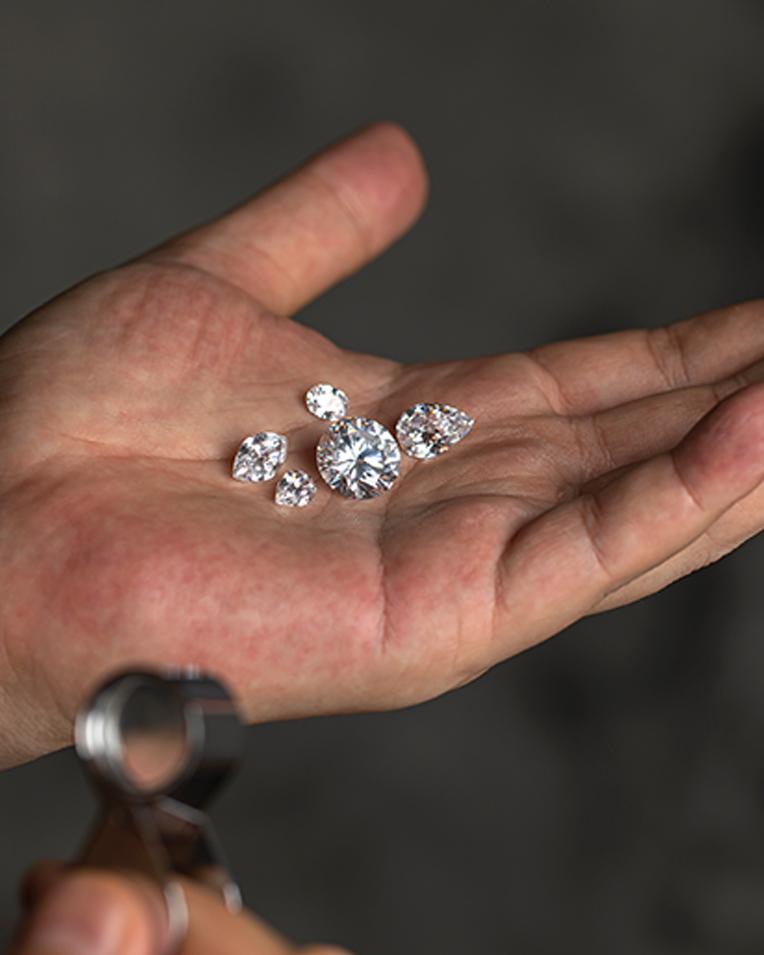
Diamond Size Chart & Calculator
How big is a 1 carat diamond? Convert carat to mm, see diamond size on your finger, and compare shapes — from 0.25ct to 5.00ct.
A 1 carat round brilliant diamond measures 6.5mm in diameter — roughly the width of a standard pencil eraser. An oval of the same weight is 8.0 × 5.5mm, appearing noticeably larger face-up. A 2 carat round is 8.1mm and a 0.5 carat is 5.1mm. Exact dimensions vary by shape — use the calculator below to convert any carat weight to millimetres.
Diamond Carat to MM Converter
Select a diamond shape and see the millimetre dimensions for every carat weight.
A 1 carat round brilliant diamond measures 6.5 × 6.5mm — roughly the width of a standard pencil eraser.
| Carat | Length (mm) | Width (mm) |
|---|---|---|
| 0.25ct | 4.1 | 4.1 |
| 0.30ct | 4.3 | 4.3 |
| 0.40ct | 4.8 | 4.8 |
| 0.50ct | 5.1 | 5.1 |
| 0.60ct | 5.4 | 5.4 |
| 0.70ct | 5.7 | 5.7 |
| 0.80ct | 6.0 | 6.0 |
| 0.90ct | 6.2 | 6.2 |
| 1.00ct | 6.5 | 6.5 |
| 1.25ct | 6.9 | 6.9 |
| 1.50ct | 7.4 | 7.4 |
| 1.75ct | 7.8 | 7.8 |
| 2.00ct | 8.1 | 8.1 |
| 2.50ct | 8.8 | 8.8 |
| 3.00ct | 9.3 | 9.3 |
| 4.00ct | 10.2 | 10.2 |
| 5.00ct | 11.0 | 11.0 |
Detailed guides: 0.50ct Round · 0.70ct Round · 1.00ct Round · 1.50ct Round · 2.00ct Round
Compare Diamond Shapes
Select up to 4 shapes to compare at the same carat weight.
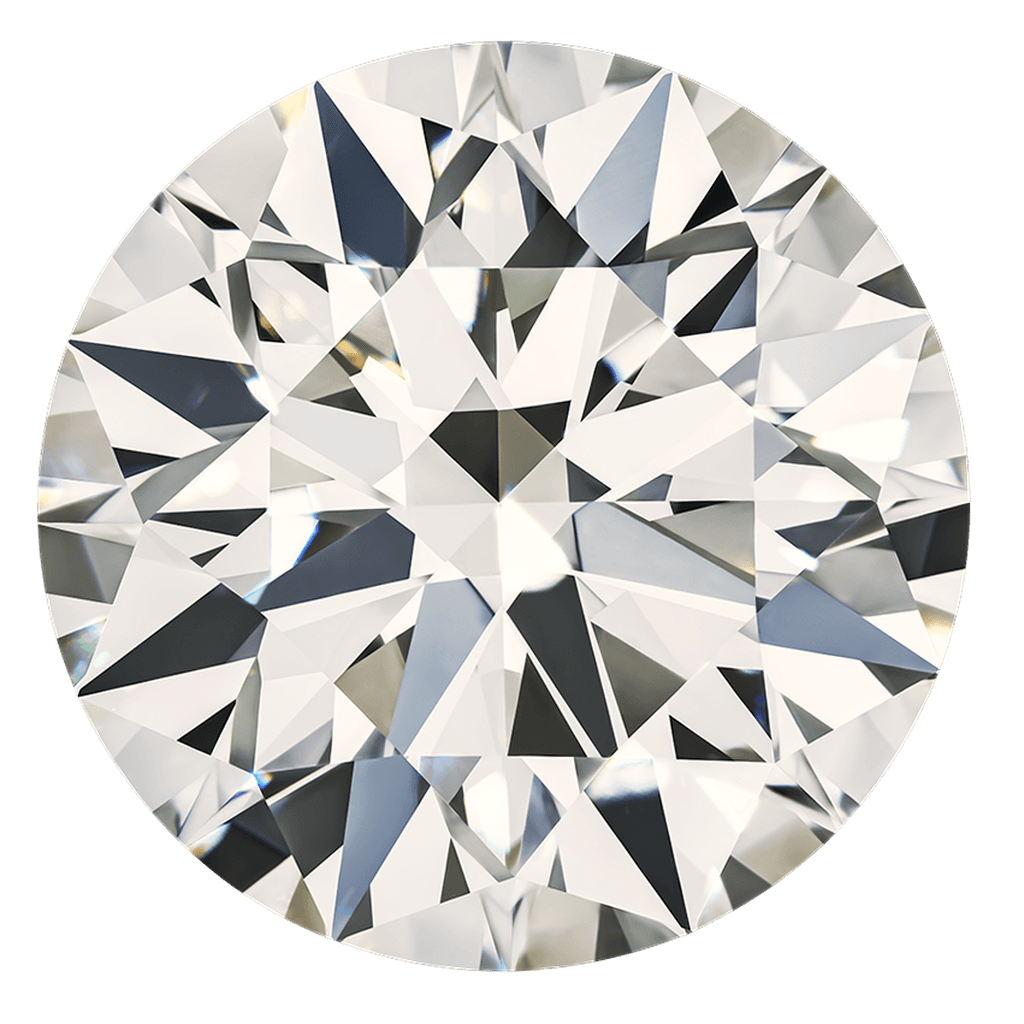
Round Brilliant
6.5 × 6.5mm
100% vs Round
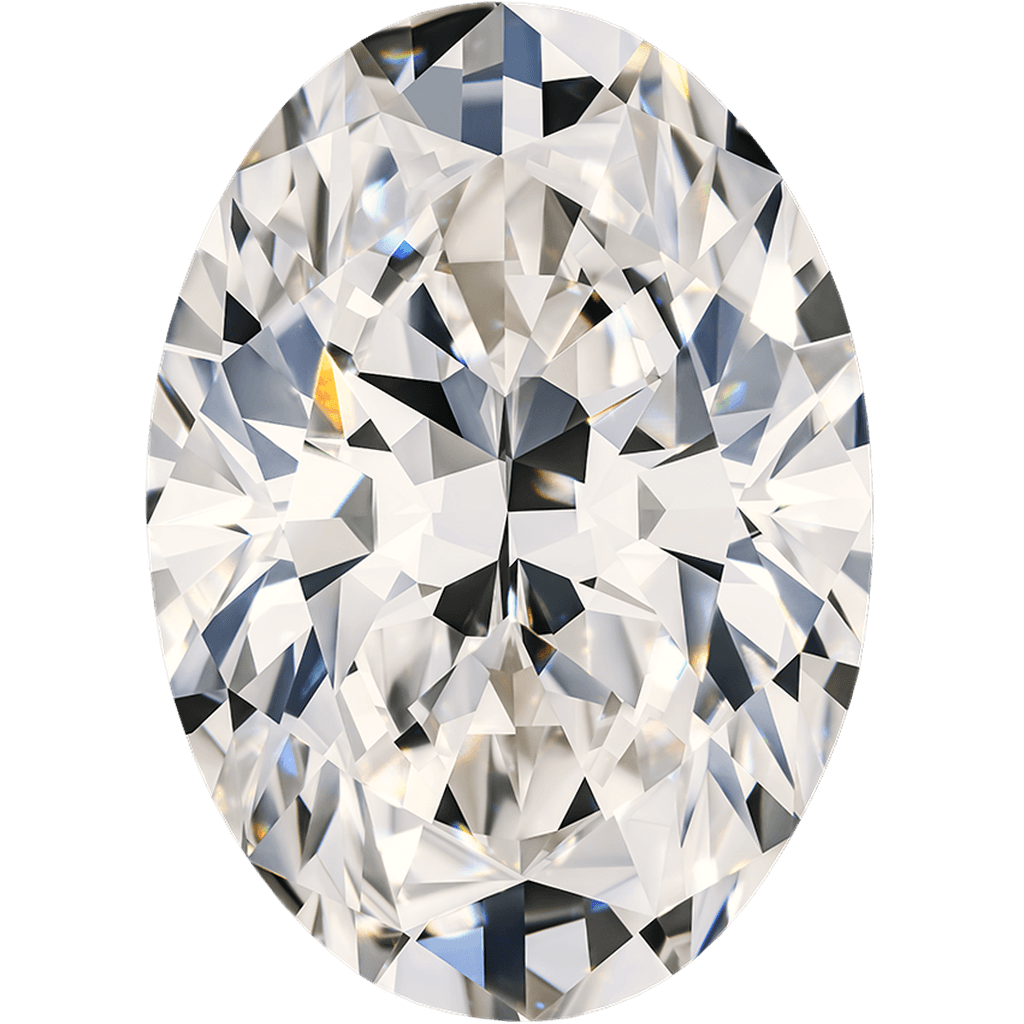
Oval
8.0 × 5.5mm
104% vs Round
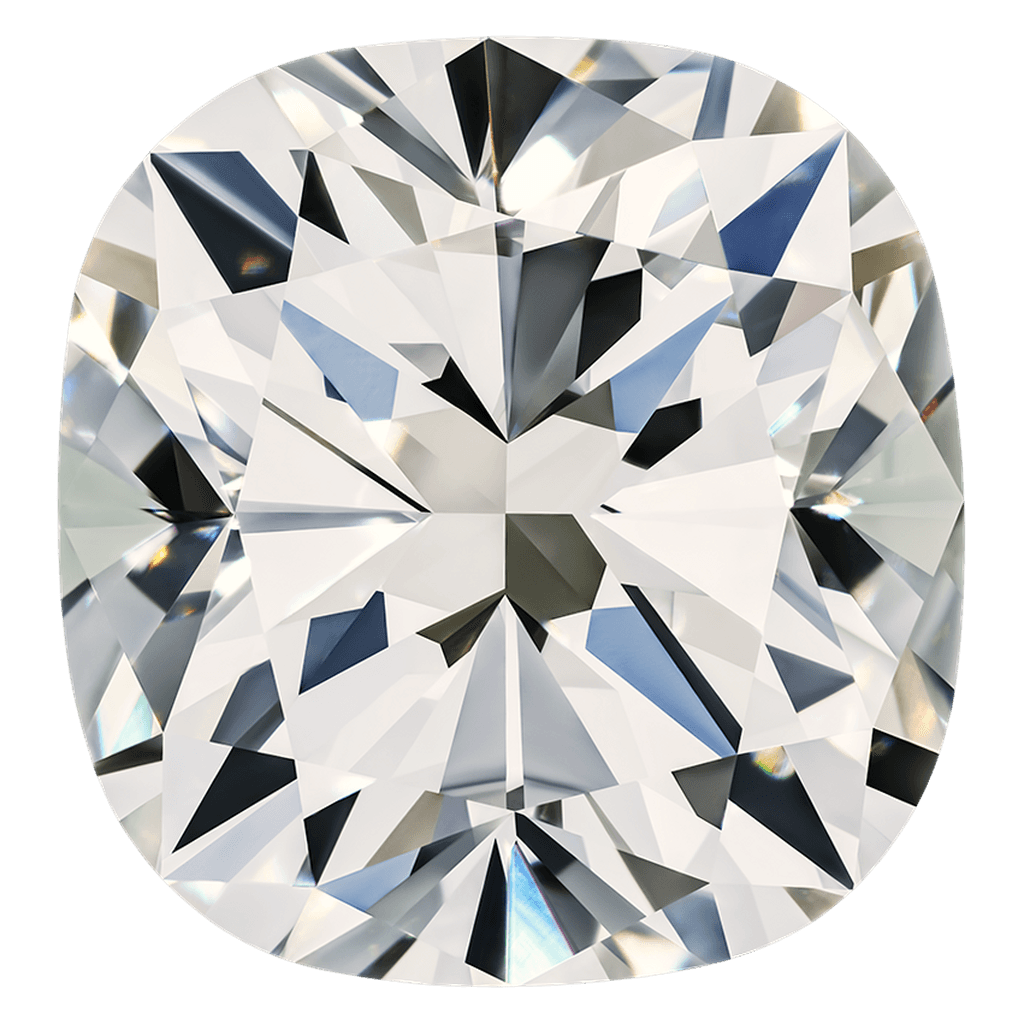
Cushion
6.3 × 5.6mm
98% vs Round
Understanding Diamond Sizes
A diamond’s carat weight tells you how much it weighs — not how large it appears. One carat equals 200 milligrams. The face-up size you actually see when looking at a diamond set in a ring depends on the stone’s shape, cut proportions, and depth. Two diamonds of identical carat weight can look noticeably different in size.
This guide shows the exact millimetre dimensions for every popular carat weight across all ten standard diamond shapes, based on GIA guidelines for well-cut stones. Use the carat to mm converter above to look up any weight instantly, or browse the complete reference tables below.
Diamond Size Charts by Shape

Round Brilliant
| Carat | Length (mm) | Width (mm) |
|---|---|---|
| 0.25ct | 4.1 | 4.1 |
| 0.30ct | 4.3 | 4.3 |
| 0.40ct | 4.8 | 4.8 |
| 0.50ct | 5.1 | 5.1 |
| 0.60ct | 5.4 | 5.4 |
| 0.70ct | 5.7 | 5.7 |
| 0.80ct | 6.0 | 6.0 |
| 0.90ct | 6.2 | 6.2 |
| 1.00ct | 6.5 | 6.5 |
| 1.25ct | 6.9 | 6.9 |
| 1.50ct | 7.4 | 7.4 |
| 1.75ct | 7.8 | 7.8 |
| 2.00ct | 8.1 | 8.1 |
| 2.50ct | 8.8 | 8.8 |
| 3.00ct | 9.3 | 9.3 |
| 4.00ct | 10.2 | 10.2 |
| 5.00ct | 11.0 | 11.0 |

Oval
| Carat | Length (mm) | Width (mm) |
|---|---|---|
| 0.25ct | 5.0 | 3.5 |
| 0.30ct | 5.5 | 3.8 |
| 0.40ct | 6.0 | 4.0 |
| 0.50ct | 6.5 | 4.5 |
| 0.60ct | 6.8 | 4.7 |
| 0.70ct | 7.1 | 5.0 |
| 0.80ct | 7.4 | 5.2 |
| 0.90ct | 7.7 | 5.4 |
| 1.00ct | 8.0 | 5.5 |
| 1.25ct | 8.5 | 5.9 |
| 1.50ct | 9.0 | 6.2 |
| 1.75ct | 9.4 | 6.5 |
| 2.00ct | 9.8 | 6.8 |
| 2.50ct | 10.5 | 7.3 |
| 3.00ct | 11.0 | 7.7 |
| 4.00ct | 12.0 | 8.4 |
| 5.00ct | 13.0 | 9.0 |

Cushion
| Carat | Length (mm) | Width (mm) |
|---|---|---|
| 0.25ct | 3.8 | 3.5 |
| 0.30ct | 4.0 | 3.7 |
| 0.40ct | 4.5 | 4.0 |
| 0.50ct | 4.8 | 4.3 |
| 0.60ct | 5.2 | 4.6 |
| 0.70ct | 5.5 | 5.0 |
| 0.80ct | 5.8 | 5.2 |
| 0.90ct | 6.0 | 5.4 |
| 1.00ct | 6.3 | 5.6 |
| 1.25ct | 6.7 | 6.0 |
| 1.50ct | 7.1 | 6.4 |
| 1.75ct | 7.5 | 6.7 |
| 2.00ct | 7.8 | 7.0 |
| 2.50ct | 8.3 | 7.5 |
| 3.00ct | 8.8 | 7.9 |
| 4.00ct | 9.6 | 8.6 |
| 5.00ct | 10.3 | 9.3 |

Emerald
| Carat | Length (mm) | Width (mm) |
|---|---|---|
| 0.25ct | 4.5 | 3.0 |
| 0.30ct | 4.7 | 3.3 |
| 0.40ct | 5.0 | 3.5 |
| 0.50ct | 5.5 | 4.0 |
| 0.60ct | 5.8 | 4.2 |
| 0.70ct | 6.1 | 4.5 |
| 0.80ct | 6.4 | 4.7 |
| 0.90ct | 6.7 | 4.9 |
| 1.00ct | 7.0 | 5.0 |
| 1.25ct | 7.5 | 5.5 |
| 1.50ct | 7.9 | 5.8 |
| 1.75ct | 8.3 | 6.1 |
| 2.00ct | 8.5 | 6.5 |
| 2.50ct | 9.2 | 7.0 |
| 3.00ct | 9.8 | 7.5 |
| 4.00ct | 10.5 | 8.0 |
| 5.00ct | 11.5 | 8.5 |

Princess
| Carat | Length (mm) | Width (mm) |
|---|---|---|
| 0.25ct | 3.5 | 3.5 |
| 0.30ct | 3.8 | 3.8 |
| 0.40ct | 4.2 | 4.2 |
| 0.50ct | 4.5 | 4.5 |
| 0.60ct | 4.8 | 4.8 |
| 0.70ct | 5.1 | 5.1 |
| 0.80ct | 5.3 | 5.3 |
| 0.90ct | 5.5 | 5.5 |
| 1.00ct | 5.5 | 5.5 |
| 1.25ct | 6.0 | 6.0 |
| 1.50ct | 6.4 | 6.4 |
| 1.75ct | 6.7 | 6.7 |
| 2.00ct | 7.0 | 7.0 |
| 2.50ct | 7.5 | 7.5 |
| 3.00ct | 8.0 | 8.0 |
| 4.00ct | 8.8 | 8.8 |
| 5.00ct | 9.5 | 9.5 |

Pear
| Carat | Length (mm) | Width (mm) |
|---|---|---|
| 0.25ct | 5.0 | 3.3 |
| 0.30ct | 5.5 | 3.5 |
| 0.40ct | 6.0 | 4.0 |
| 0.50ct | 6.8 | 4.5 |
| 0.60ct | 7.1 | 4.7 |
| 0.70ct | 7.5 | 5.0 |
| 0.80ct | 7.8 | 5.2 |
| 0.90ct | 8.1 | 5.4 |
| 1.00ct | 8.5 | 5.5 |
| 1.25ct | 9.0 | 6.0 |
| 1.50ct | 9.5 | 6.3 |
| 1.75ct | 10.0 | 6.7 |
| 2.00ct | 10.5 | 7.0 |
| 2.50ct | 11.2 | 7.5 |
| 3.00ct | 12.0 | 8.0 |
| 4.00ct | 13.0 | 8.8 |
| 5.00ct | 14.0 | 9.5 |

Marquise
| Carat | Length (mm) | Width (mm) |
|---|---|---|
| 0.25ct | 6.0 | 3.0 |
| 0.30ct | 6.5 | 3.3 |
| 0.40ct | 7.4 | 3.7 |
| 0.50ct | 8.0 | 4.0 |
| 0.60ct | 8.5 | 4.3 |
| 0.70ct | 9.0 | 4.5 |
| 0.80ct | 9.5 | 4.8 |
| 0.90ct | 10.0 | 5.0 |
| 1.00ct | 10.5 | 5.0 |
| 1.25ct | 11.0 | 5.5 |
| 1.50ct | 12.0 | 6.0 |
| 1.75ct | 12.5 | 6.3 |
| 2.00ct | 13.0 | 6.5 |
| 2.50ct | 14.0 | 7.0 |
| 3.00ct | 15.0 | 7.5 |
| 4.00ct | 16.0 | 8.0 |
| 5.00ct | 17.0 | 8.5 |

Radiant
| Carat | Length (mm) | Width (mm) |
|---|---|---|
| 0.25ct | 3.8 | 3.5 |
| 0.30ct | 4.0 | 3.7 |
| 0.40ct | 4.5 | 4.0 |
| 0.50ct | 4.9 | 4.3 |
| 0.60ct | 5.2 | 4.6 |
| 0.70ct | 5.5 | 4.8 |
| 0.80ct | 5.8 | 5.1 |
| 0.90ct | 6.1 | 5.3 |
| 1.00ct | 6.3 | 5.5 |
| 1.25ct | 6.8 | 5.9 |
| 1.50ct | 7.2 | 6.3 |
| 1.75ct | 7.5 | 6.6 |
| 2.00ct | 7.8 | 6.8 |
| 2.50ct | 8.5 | 7.3 |
| 3.00ct | 9.0 | 7.8 |
| 4.00ct | 10.0 | 8.5 |
| 5.00ct | 10.8 | 9.2 |

Asscher
| Carat | Length (mm) | Width (mm) |
|---|---|---|
| 0.25ct | 3.5 | 3.5 |
| 0.30ct | 3.8 | 3.8 |
| 0.40ct | 4.2 | 4.2 |
| 0.50ct | 4.5 | 4.5 |
| 0.60ct | 4.8 | 4.8 |
| 0.70ct | 5.1 | 5.1 |
| 0.80ct | 5.3 | 5.3 |
| 0.90ct | 5.5 | 5.5 |
| 1.00ct | 5.5 | 5.5 |
| 1.25ct | 6.0 | 6.0 |
| 1.50ct | 6.5 | 6.5 |
| 1.75ct | 6.8 | 6.8 |
| 2.00ct | 7.0 | 7.0 |
| 2.50ct | 7.5 | 7.5 |
| 3.00ct | 8.0 | 8.0 |
| 4.00ct | 8.8 | 8.8 |
| 5.00ct | 9.5 | 9.5 |

Heart
| Carat | Length (mm) | Width (mm) |
|---|---|---|
| 0.25ct | 4.0 | 4.0 |
| 0.30ct | 4.3 | 4.3 |
| 0.40ct | 4.7 | 4.7 |
| 0.50ct | 5.0 | 5.0 |
| 0.60ct | 5.4 | 5.4 |
| 0.70ct | 5.7 | 5.7 |
| 0.80ct | 5.9 | 5.9 |
| 0.90ct | 6.1 | 6.1 |
| 1.00ct | 6.5 | 6.5 |
| 1.25ct | 7.0 | 7.0 |
| 1.50ct | 7.4 | 7.4 |
| 1.75ct | 7.8 | 7.8 |
| 2.00ct | 8.0 | 8.0 |
| 2.50ct | 8.7 | 8.7 |
| 3.00ct | 9.3 | 9.3 |
| 4.00ct | 10.2 | 10.2 |
| 5.00ct | 11.0 | 11.0 |
Which Diamond Shape Looks Biggest?
At the same carat weight, elongated shapes like marquise, pear, and oval appear significantly larger than square or round shapes. This is because they spread their mass across a wider surface area rather than concentrating weight in depth.
| Shape | 1ct Dimensions | Face-up vs Round |
|---|---|---|
 | 6.5 × 6.5mm | Same |
 | 8.0 × 5.5mm | 4% larger |
 | 6.3 × 5.6mm | 16% smaller |
 | 7.0 × 5.0mm | 17% smaller |
 | 8.5 × 5.5mm | 11% larger |
 | 10.5 × 5.0mm | 24% larger |
Smart Sizing Tips
Buy just below the threshold. A 0.90ct diamond is visually almost identical to 1.00ct — the diameter difference is less than 0.3mm — but the price can be 15–20% lower. The same principle applies at 0.50ct, 1.50ct, and 2.00ct thresholds.
Choose elongated shapes for maximum impact. If size appearance matters more than brilliance, oval, marquise, and pear shapes deliver significantly more face-up area per carat than round or princess cuts.
Prioritise cut quality over carat weight. A beautifully cut 0.90ct diamond will face-up larger and sparkle more than a poorly cut 1.10ct stone. The cut determines how much of the weight you actually see from above.
Consider lab-grown for larger sizes. Lab-grown diamonds are physically identical to natural diamonds but cost 60–80% less. This means you can comfortably move up one or two carat brackets within the same budget.
Frequently Asked Questions
How big is a 1 carat diamond?
A well-cut 1 carat round brilliant diamond measures approximately 6.5mm in diameter — roughly the width of a standard pencil eraser. An oval of the same weight measures about 8.0 × 5.5mm, appearing noticeably larger face-up due to its elongated shape.
Does carat mean size?
No — carat is a unit of weight, not size. One carat equals 200 milligrams (0.2 grams). Two diamonds of the same carat weight can look very different in size depending on their shape, cut depth, and proportions. A shallow-cut diamond spreads its weight across a larger face-up area, appearing bigger than a deep-cut stone of identical weight.
Which diamond shape looks biggest for the same carat?
Marquise and pear shapes appear largest face-up because their elongated outlines spread weight across a wider surface area. An oval also faces up 10–15% larger than a round of the same weight. Princess and asscher cuts appear smallest because they carry more weight in their depth.
What is the most popular diamond size in the UK?
The most popular engagement ring diamond size in the UK falls between 0.70ct and 1.00ct for natural diamonds, and 1.00ct to 2.00ct for lab-grown diamonds. The sweet spot for most couples is a 1 carat round brilliant, which offers a visually impactful stone at a comfortable price point.
How do I know what size diamond will look good on my finger?
Diamond size perception depends on your finger width. Slender fingers (size H–L) make diamonds appear larger, so a 0.70–1.00ct stone can look substantial. Wider fingers (size O+) benefit from 1.00ct and above. The best way to judge is to try sizes in person — or use our interactive diamond size tool which shows actual-size diamonds on your screen.
Is a 0.9ct diamond noticeably smaller than 1ct?
No — the difference is virtually invisible to the naked eye. A 0.90ct round diamond measures approximately 6.2mm in diameter versus 6.5mm for 1.00ct, a difference of just 0.3mm. However, the price difference between 0.90ct and 1.00ct can be 15–20% because 1 carat is a psychological threshold in the diamond market.
How do I convert carat to mm?
Use the carat-to-mm converter above — select your diamond shape and carat weight to see exact millimetre dimensions instantly. The conversion depends on the shape because different shapes distribute weight differently. For example, a 1ct round is 6.5mm while a 1ct oval is 8.0 × 5.5mm.
How accurate is an online diamond size chart?
Standard diamond size charts show relative proportions but not true physical size, because every screen has a different pixel density. Our interactive tool solves this by calibrating to your specific screen using a credit card (which is a universal ISO standard size), then rendering diamonds at their exact millimetre dimensions.
How does diamond size look on different finger sizes?
The same diamond looks dramatically different depending on finger width. A 1 carat diamond on a UK size H finger (15.2mm width) covers significantly more of the finger surface than on a size R finger (18.9mm width). Slender fingers make the same stone look more substantial.
What size diamond is considered big?
In the UK market, diamonds above 1.50ct are generally considered large for engagement rings. A 2.00ct round brilliant at 8.1mm diameter is noticeably impressive on any finger. For context, the average engagement ring diamond in the UK is approximately 0.80–1.00ct.
See True Physical Sizes on Your Screen
Our credit-card calibration tool renders diamonds at their exact millimetre dimensions on your specific screen.
Calibrate Your ScreenReady to choose your diamond?
Browse our live diamond inventory or let our Hatton Garden specialists help.