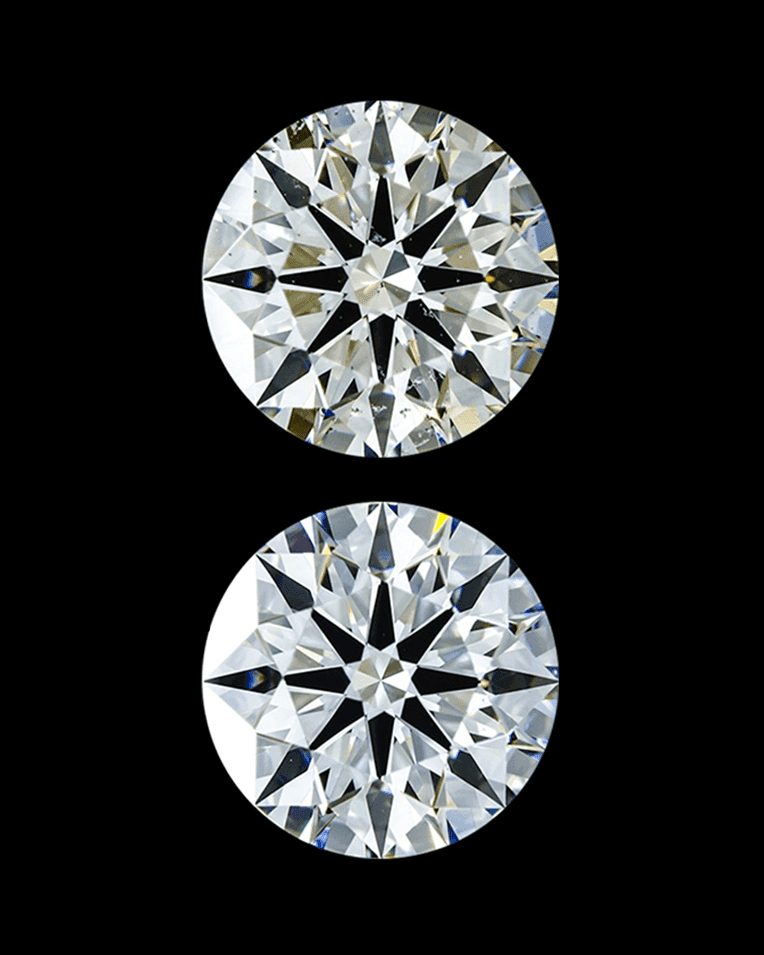
Types of Inclusions
A visual guide to the most common diamond inclusions — what they look like, how they form, and which ones affect brilliance.
Every natural diamond is the product of immense heat and pressure deep within the Earth. During this process, tiny imperfections — known as inclusions — are formed within the crystal structure. These are not defects in the traditional sense; they are a natural signature, a geological fingerprint that makes each diamond unique.
Understanding the different types of inclusions helps you make an informed decision about clarity. Not all inclusions are equal — some are virtually invisible to the naked eye, while others can affect a diamond's brilliance or structural integrity. The key is knowing which inclusions matter and which you can comfortably accept.
Pinpoint
Pinpoints are the most common inclusion type. They appear as tiny dots — often white or black — visible only under magnification. A single pinpoint rarely affects clarity grade or appearance. However, when many pinpoints cluster together, they form a "cloud" inclusion that may create a hazy area within the stone.
In most diamonds graded VS2 or above, pinpoints are the primary inclusion and have no meaningful impact on beauty or brilliance.
Cloud
A cloud is a group of pinpoints clustered so closely that they create a hazy or milky area within the diamond. Small clouds are common and harmless — they appear on grading reports as a plotted region of tiny dots. However, a large, dense cloud that spans a significant portion of the stone can reduce transparency and make the diamond appear dull.
Diamonds described on their certificate as having "clarity based on clouds not shown" warrant careful visual inspection, as the cloud may be extensive enough to affect the stone's overall appearance.
Feather
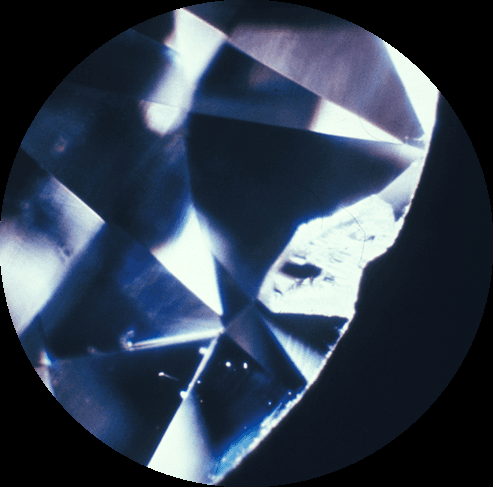
A feather is a small crack or fracture within the diamond. Under magnification, feathers have a wispy, feathered appearance — hence the name. Small feathers deep within the stone are common and pose no durability risk. However, a feather that reaches the surface or extends across a significant portion of the diamond may affect structural integrity.
The position of a feather matters more than its size. A tiny feather near the girdle (the diamond's widest edge) could be a vulnerability point if struck during setting, while a larger feather buried deep in the pavilion may be entirely harmless.
Needle
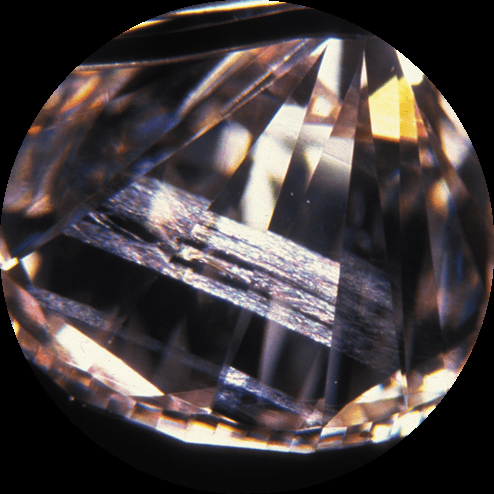
Needles are long, thin inclusions that appear as fine lines under magnification. They are actually elongated crystals of another mineral trapped within the diamond during formation. A single needle is usually invisible to the naked eye and does not affect brilliance.
Multiple needles running in parallel can occasionally create a visible effect in the stone, but this is uncommon in diamonds graded VS2 or above.
Crystal
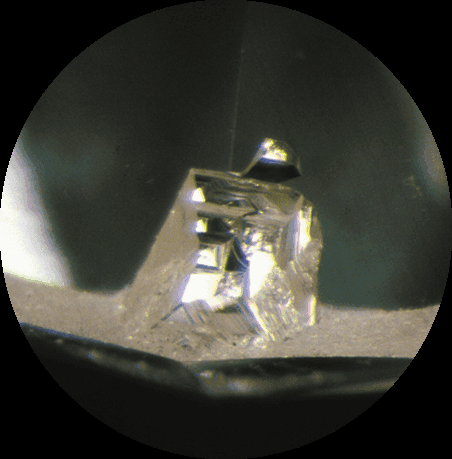
Crystal inclusions are tiny mineral crystals — often diamond, garnet, or other minerals — trapped inside the host diamond. They can appear colourless, black, red, or green depending on the mineral. Colourless crystals are the least visible; dark crystals are the most conspicuous.
A dark crystal positioned directly beneath the table facet will be more visible than one tucked under a crown facet. Position and colour determine how much a crystal inclusion affects the diamond's appearance.
Twinning Wisp
Twinning wisps form when a diamond's crystal structure changes direction during growth — a phenomenon called crystal twinning. The result is a series of pinpoints, clouds, and crystals arranged along the twinning plane, creating a wispy, ribbon-like pattern.
Twinning wisps are most commonly found in fancy-shaped diamonds, particularly hearts, pears, and marquises. They are difficult to see in person but are clearly mapped on a grading report.
Knot
A knot occurs when an included crystal extends to the surface of a polished facet. Under magnification, the crystal may look like a raised area or a slightly different reflective pattern on the facet surface. Knots are typically visible only under close inspection but can occasionally catch light differently from the surrounding facet.
Cavity
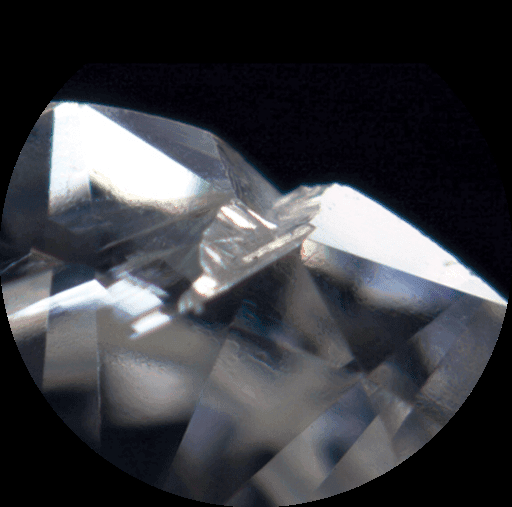
A cavity is a small opening on the surface of a diamond, usually created when an inclusion near the surface is dislodged during polishing. Cavities can trap dirt and oil over time, potentially becoming more visible with wear. Their impact depends on size and position — a small cavity on a pavilion facet is far less consequential than one near the table.
Indented Natural
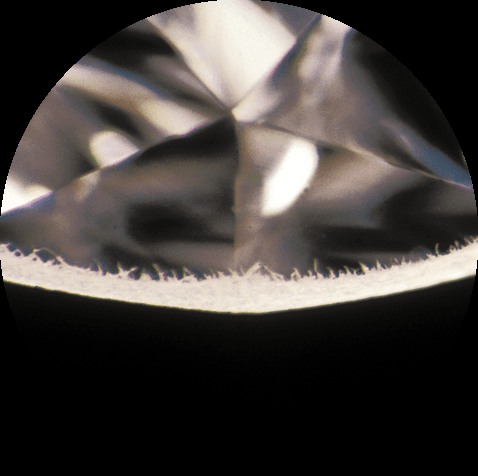
An indented natural is a portion of the original rough diamond's surface that dips below the polished surface of the finished stone. It is left intentionally by the cutter to preserve carat weight. Indented naturals are most often found along the girdle and are typically visible only under magnification. They are a testament to the cutter's decision to prioritise weight while maintaining an acceptable clarity grade.
Which Inclusions Matter Most
The impact of an inclusion depends on five factors: size, number, position, nature, and relief (how visible it is against the surrounding diamond). A large, dark crystal beneath the table will affect appearance far more than a cluster of tiny pinpoints near the girdle.
For most buyers, the practical advice is straightforward: choose a diamond that is "eye-clean" — one where no inclusions are visible to the naked eye in normal viewing conditions. This typically means VS2 or SI1 for round brilliants and VS1 or VS2 for step-cut shapes with larger, more transparent tables.
At MOH London, every diamond is individually inspected to ensure that its clarity grade accurately represents its visual appeal. We are always happy to walk you through a diamond's inclusion map in person at our Hatton Garden studio.
Put Your Knowledge Into Practice
Browse certified diamonds or engagement ring settings — apply what you've learned to find your perfect stone.