Diamond Cut
Why cut is the most important of the 4Cs — how table percentage, depth, symmetry, and polish determine brilliance. Learn ideal cut grades for round, oval, emerald, and cushion diamonds.
It is a common misunderstanding that a diamond's cut refers to its shape. The two are completely distinct aspects of design. Shape describes the apparent form of the stone — round, pear, heart, emerald, and so on. Cut, by contrast, is the measure of how well a diamond reflects light — its sparkle.
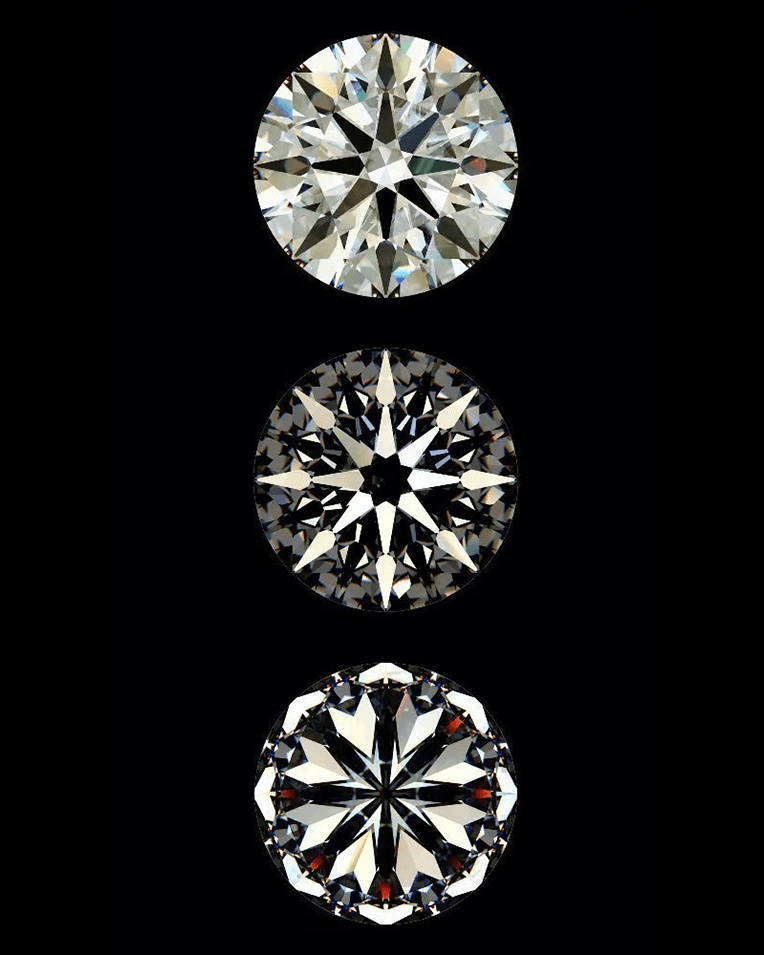
A diamond's radiance is controlled by its cut. Nothing is more impactful on a diamond's brilliance than the quality of its cut. A well-cut diamond reflects light out through the top of the stone (the table). If the cut is too shallow, light escapes from the base; if too deep, it leaks from the sides.
The GIA grades cut by precisely measuring the angles and sizes of the facets, including the table, depth, girdle, pavilion, crown and culet. Polish and symmetry also contribute. All of these factors come together to determine the cut grade. Each diamond shape and size has ideal cut proportions.
Diamond Cut Grades
Diamond cuts are graded from lowest to highest quality based on the dimension and quality of light reflection. The following grades are the standard classifications:
- —Excellent — Symmetry, angles, proportions and light reflection are as close to perfection as possible. Represents approximately the top three per cent of diamond quality. These stones reflect virtually all the light that enters them.
- —Very Good — Represents roughly the top fifteen per cent of diamonds. Reflects nearly as much light as an Excellent cut, with only a marginal difference perceptible to trained professionals.
- —Good — Reflects notably less light than Very Good, representing about a quarter of all diamonds. Good cut diamonds offer significantly lower cost while retaining attractive sparkle.
- —Fair — The lowest cut quality approved for jewellery by experts, representing about thirty-five per cent of diamonds. These stones return a reasonable but limited amount of light.
- —Poor — Diamonds with a Poor cut allow most light to escape, producing a lifeless appearance. This grade is generally never used in fine jewellery.
How Cut Affects Appearance
Precise artistry and workmanship are required to fashion a stone so its proportions, symmetry and polish deliver the magnificent return of light only possible in a diamond. A diamond should be cut proportionally — neither very shallow nor very deep — given its dimensions. The cut affects appearance in three key ways:
Brilliance
Brilliance is the brightness created by the combination of white light reflections inside and on the surface of the stone. A diamond needs more than just bright light return to appear brilliant — it also requires contrast between bright and dark areas, so that the light it produces appears more intense. Diamonds with poor light return will look darker, duller or lifeless.
Fire
Fire is the dispersion of white light into all the colours of the visible spectrum. The way a diamond catches the light is what produces those beautiful flashes of rainbow colour. Fire is most visible in darker, more dimly lit environments with fewer, more directional light sources.
Scintillation
Scintillation is the pattern of flashes — light and dark — that a diamond produces when the stone, the light, or the viewer is in motion. For scintillation to occur, there must be enough structural contrast in the facets to bounce light around. It is most visible in well-lit environments and is what gives a diamond its dynamic, living sparkle.
Visual Cut Comparison
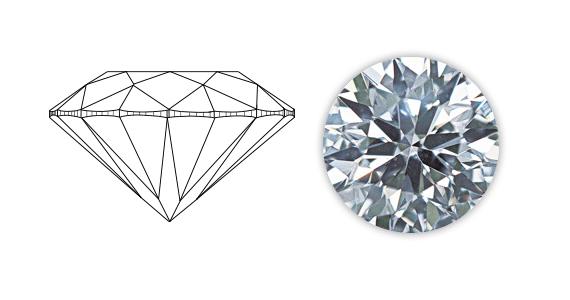
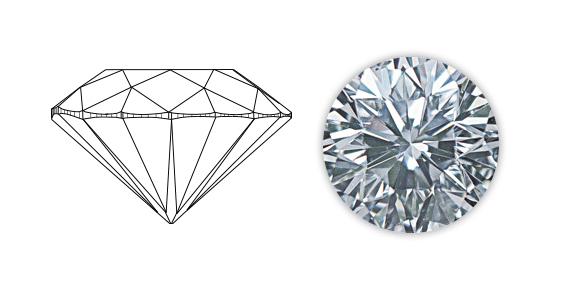
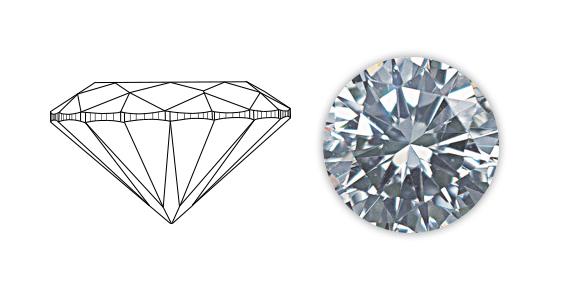
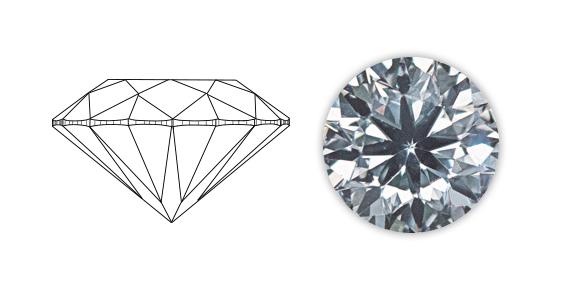
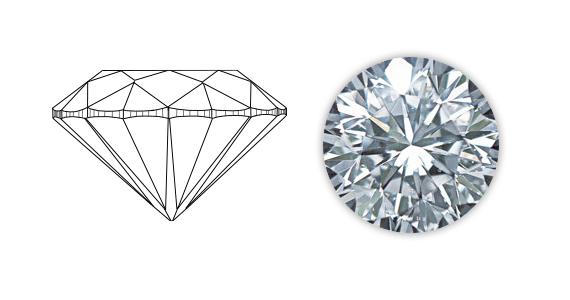
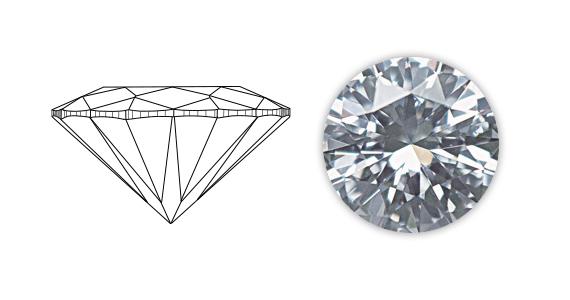
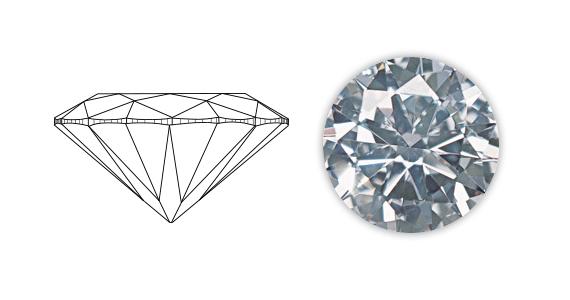
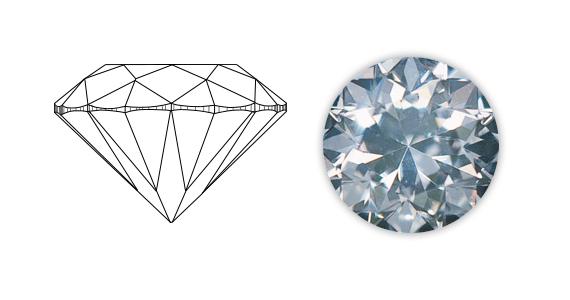
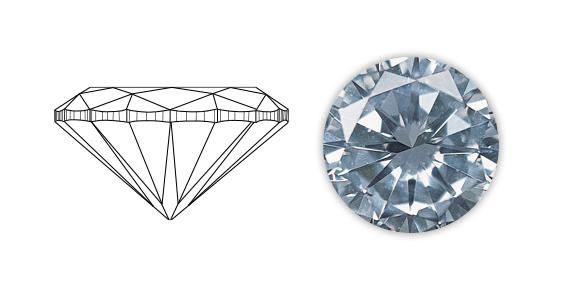
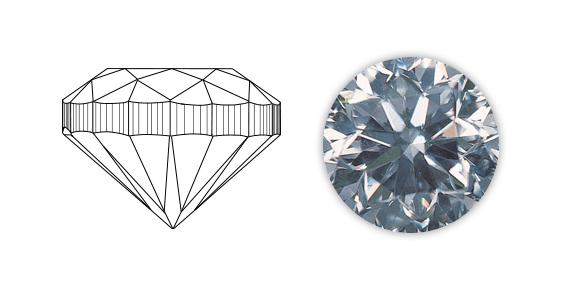
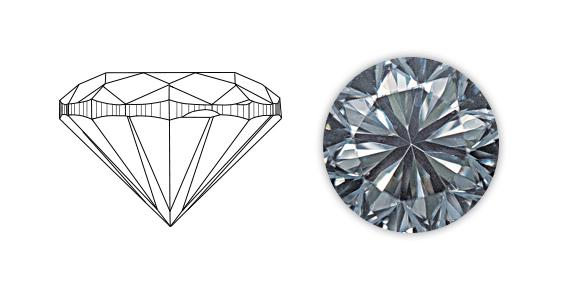
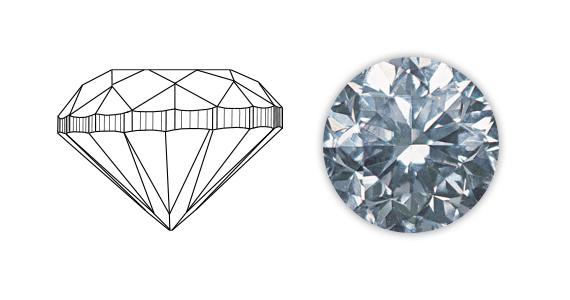
Select a cut grade to see how proportions affect a diamond's appearance. Each image shows the profile diagram alongside the face-up view.
Excellent
The highest grade — maximum brilliance, fire, and scintillation. Light performance is exceptional in all conditions.
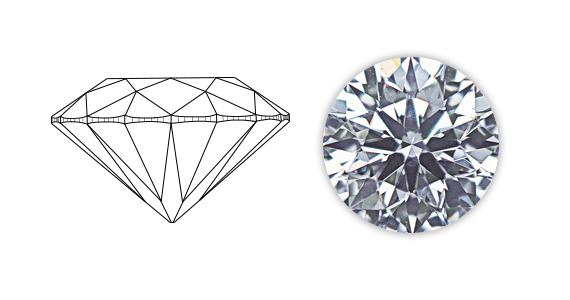
An even pattern of bright and dark areas. Scores in the top category for all grade-setting determinants.
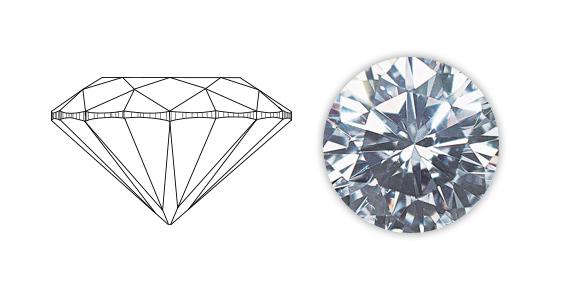
Different proportions from example 1, yet also has an even pattern of bright and dark areas and scores top marks.
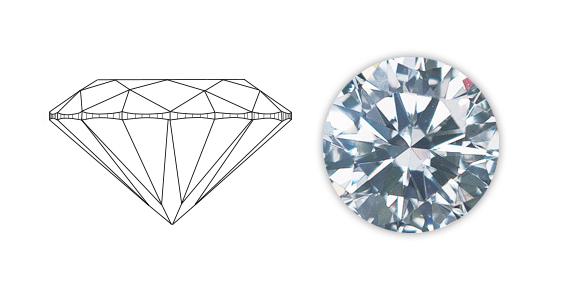
Also scores in the top category for all grade-setting determinants.
Best Cut Grade for Your Diamond
Cut is the single most important factor in a diamond's beauty. A well-cut diamond will outperform a higher colour or clarity stone every time. We always recommend prioritising cut grade above all other characteristics.
For round brilliant diamonds, choose Excellent or Very Good cut. The difference between these two grades is subtle — both produce exceptional brilliance. The savings from Very Good versus Excellent (typically 10-15%) can be redirected to colour or carat weight.
Fancy shapes (oval, cushion, emerald, pear) do not receive a formal cut grade from GIA. For these shapes, focus on Polish and Symmetry — both should be Very Good or Excellent. The length-to-width ratio also matters: it affects how the shape looks on the finger.
At MOH London, we hand-select diamonds for their light performance. Our Hatton Garden gemmologists can show you side-by-side comparisons of different cut grades — the difference in sparkle is immediately visible and is the most compelling demonstration in diamond education.
Frequently Asked Questions
What is the best diamond cut?
Excellent is the highest cut grade. However, Very Good cut diamonds reflect nearly the same amount of light and cost 10-15% less. For most engagement rings, either grade will produce exceptional brilliance. The visible difference between Excellent and Very Good is minimal to the untrained eye, making Very Good an outstanding value choice.
Is cut the same as shape?
No — cut and shape are completely different. Shape describes the form of the diamond (round, oval, emerald, cushion). Cut refers to how well the diamond's facets interact with light — the quality of its proportions, symmetry, and polish. A round diamond can have an Excellent or Poor cut; the shape is round either way.
Why is cut the most important of the 4Cs?
Cut has the greatest impact on a diamond's visual appeal because it directly controls brilliance (white light return), fire (rainbow flashes), and scintillation (sparkle pattern). A poorly cut diamond with D colour and Flawless clarity will look dull and lifeless. A well-cut diamond with lower colour and clarity will outshine it every time.
Do fancy shapes have a cut grade?
No — GIA only assigns a formal cut grade to round brilliant diamonds. For fancy shapes (oval, cushion, emerald, pear, marquise, etc.), evaluate Polish and Symmetry grades instead, both of which should be Very Good or Excellent. The length-to-width ratio and depth percentage are also important indicators of cut quality in fancy shapes.
What is the difference between Excellent and Very Good cut?
An Excellent cut diamond reflects virtually all light that enters it, producing maximum brilliance. A Very Good cut diamond reflects nearly as much light, with only marginal differences detectable by trained professionals under controlled conditions. In everyday wear, the two grades appear virtually identical. Very Good represents the top 15% of diamonds and offers outstanding value.
How does cut affect diamond price?
Cut grade has a significant impact on price. An Excellent cut round brilliant typically commands a 10-20% premium over Very Good, and 25-40% over Good. This premium reflects the skill required to cut ideal proportions and the rough diamond material lost in the process — well-cut diamonds sacrifice weight to maximise light performance.
Put Your Knowledge Into Practice
Browse certified diamonds or engagement ring settings — apply what you've learned to find your perfect stone.