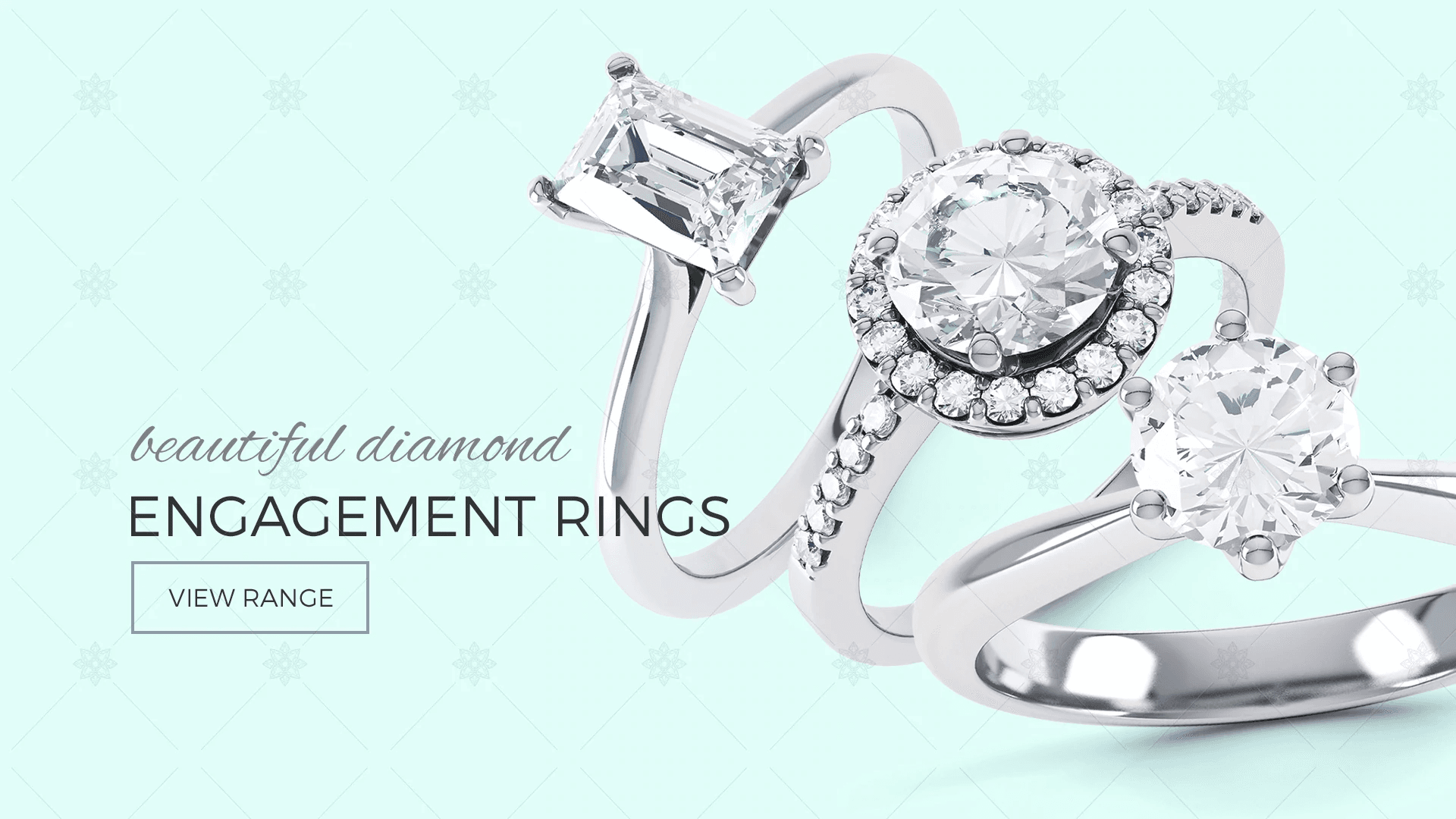
Head Styles
Explore engagement ring head styles — classic prong, peg head, cathedral, basket, bezel, and trellis. How the head affects the look and security of your centre stone.
The head of an engagement ring is the component that holds the centre stone in place — the structural cradle upon which the entire design rests. It is the first thing the eye is drawn to and the element most responsible for how the diamond is presented to the world. The head determines how much light reaches the stone, how prominently it sits above the band, and how securely it is held throughout decades of daily wear.
Head style is frequently confused with setting style, but the two are distinct. The setting refers to the broader design of the ring — solitaire, halo, three-stone, pavé, and so on — while the head is specifically the prong or mounting structure at the top of the setting that grips the centre diamond. A solitaire ring, for example, might feature a classic four-prong head, a cathedral head, or a bezel head. The setting remains the same; the head changes the character entirely.
Selecting the right head style is one of the most consequential decisions in the design of an engagement ring. It affects the profile view, the way the diamond catches light, how the ring sits alongside a wedding band, and the level of protection afforded to the stone. What follows is a thorough guide to the most refined head styles available, each with its own visual signature and practical considerations.
Classic Prong Head (Four-Prong)
The four-prong head is the most traditional and enduringly popular choice for engagement rings. Four slender metal claws grip the diamond at the cardinal points — north, south, east and west — holding the stone firmly while leaving the maximum amount of its surface visible. This openness allows light to enter the diamond from virtually every angle, producing exceptional brilliance and fire.
The simplicity of the four-prong head is its greatest strength. It does not compete with the diamond for attention; rather, it presents the stone as the undisputed focal point. The prongs themselves can be shaped in various profiles — rounded, pointed, flat or V-shaped — each subtly altering the character of the ring. V-prongs, for instance, are often used on princess-cut and marquise diamonds to protect the delicate pointed corners of those shapes.
Because only four points of contact secure the stone, the four-prong head allows marginally more of the diamond to be seen than a six-prong alternative. This comes with a modest trade-off in security — if a single prong is damaged, the stone is more vulnerable. For this reason, regular prong inspections are recommended, particularly for rings worn daily. Despite this, the four-prong head remains the choice of those who wish the diamond to speak entirely for itself.
Six-Prong Head
The six-prong head adds two additional claws to the classic configuration, providing enhanced security and a subtly different aesthetic. With six points of contact evenly distributed around the stone, the diamond is held with greater structural integrity — even if one prong were to sustain damage, the remaining five would continue to hold the stone securely in place.
Visually, the six-prong head creates a delicate crown-like effect around the diamond. The additional prongs frame the stone with a quiet symmetry that many find exceptionally elegant, particularly on round brilliant cuts. There is a marginal reduction in the visible surface of the diamond — the extra metal covers a fraction more of the girdle — but in practice, this is imperceptible to the naked eye.
The six-prong configuration was popularised by Tiffany & Co. in 1886, and its association with that house has given it an enduring cachet. It is the head style most closely associated with the archetypal engagement ring — refined, secure, and timeless. For those who value peace of mind alongside beauty, the six-prong head represents a natural choice.
Peg Head
The peg head is a minimal, low-profile mounting in which the diamond sits close to the band with very little visible metalwork. The stone is secured by a small, streamlined structure that elevates it only slightly above the shank, creating a sleek and contemporary silhouette that feels modern without sacrificing sophistication.
This head style is favoured in solitaire designs where the diamond is intended to speak for itself, unadorned by architectural detail. The peg head draws attention to the quality of the stone rather than the intricacy of the setting. Its understated nature makes it particularly well suited to those who prefer a ring that sits comfortably against the hand and does not catch on clothing or gloves.
Because the stone sits lower, the peg head also offers a degree of practical protection — the diamond is less exposed to knocks and abrasions. It is an excellent choice for those with active lifestyles who want a ring that is both elegant and resilient. The clean lines of a peg head pair beautifully with a polished or knife-edge band, creating a ring of quiet authority.
Cathedral Head
The cathedral head takes its name from the graceful arches of Gothic architecture. In this design, the metal of the shank sweeps upward in two or more arched supports that cradle the diamond from either side, lifting it above the band with a sense of height and grandeur. The result is a ring with a dramatic profile that catches the eye from every angle.
The arched metalwork of the cathedral head provides excellent structural support for the centre stone. The sweeping curves distribute pressure evenly, making this one of the more secure head styles available. The elevation also allows light to pass beneath the diamond, enhancing its brilliance when viewed from the side — a detail that is particularly striking in candlelight.
Cathedral heads pair beautifully with a wide range of diamond shapes, from round brilliants to ovals and emerald cuts. The architectural quality of the arches adds visual weight and presence to the ring, making it feel substantial without being heavy. It is a head style that rewards close inspection — the profile view is often as captivating as the face-up presentation. One practical consideration: the added height may affect how the ring sits alongside a wedding band, so it is worth considering the pairing at the design stage.
Basket Head
The basket head is a variation on the prong setting in which horizontal bars of metal connect the individual prongs, creating an open, cage-like structure beneath the diamond. This latticework allows light to enter the stone from all angles — from above, from the sides, and from below — producing maximum brilliance and scintillation.
Structurally, the basket head offers a compelling combination of openness and integrity. The connecting bars reinforce the prongs without adding visual bulk, creating a head that is both airy and robust. The basket is visible from the side, adding a layer of architectural interest to the ring that is absent in a simple prong setting.
This head style is particularly effective with round and oval diamonds, where the symmetry of the basket complements the geometry of the stone. It is also a practical choice for those who want the light performance of an open setting with the structural reassurance of additional metalwork. The basket head occupies a refined middle ground — more secure than a classic prong, more open than a bezel — and is well suited to those who appreciate engineering as much as aesthetics.
Bezel Head
The bezel head encircles the diamond with a continuous rim of metal that wraps around the entire circumference of the stone. There are no prongs, no claws, no points of vulnerability — the diamond is held within a smooth, unbroken collar of precious metal. This provides the highest level of protection of any head style, making it the definitive choice for those who prioritise security.
The visual character of a bezel head is clean, modern and architectural. The metal rim frames the diamond with a crisp, geometric precision that feels distinctly contemporary. The bezel can be fabricated in full (encircling the entire stone) or in a partial configuration (covering only two sides), with each variation producing a different aesthetic. A full bezel creates a bold, graphic silhouette; a partial bezel offers a lighter, more open feel while retaining much of the protective benefit.
Because the metal rim covers the girdle of the diamond, a bezel head can make the stone appear marginally smaller than it would in a prong setting. However, this is offset by the clean frame that the bezel provides, which draws the eye directly to the centre of the stone. The bezel is ideal for those with active lifestyles — the smooth rim eliminates the risk of snagging on fabric and protects the stone from side impacts. It is a head style that communicates confidence and modernity in equal measure.
Trellis Head
The trellis head features intertwining prongs that weave over and under one another as they rise from the band to cradle the diamond. The effect is reminiscent of woven metalwork or the lattice of a garden trellis — organic, decorative, and distinctly romantic. It is a head style that rewards the profile view, where the interlacing detail is most visible.
Beyond its decorative appeal, the trellis head provides excellent security. The interwoven prongs distribute force across multiple contact points, holding the stone firmly in place. Many trellis designs incorporate small accent diamonds or pavé detailing within the weave, adding a subtle sparkle that complements the centre stone without overwhelming it.
The trellis head is particularly suited to those who want their ring to carry a sense of artisanal craftsmanship — the woven metalwork suggests the hand of a skilled goldsmith rather than a mass-produced design. It pairs well with round, oval and cushion-cut diamonds, and the decorative profile adds visual interest from every angle. For those who appreciate detail and wish their ring to tell a story, the trellis head is a compelling choice.
Tiger Prong
The tiger prong is a distinctive, expressive head style in which the prongs are shaped to resemble organic, claw-like forms — broader at the base and tapering to fine tips where they meet the diamond. The effect is sculptural and bold, adding character and individuality to the ring without compromising the security of the stone.
This style is more decorative than a standard prong setting and is often chosen by those who want their engagement ring to feel unique. The tiger prong adds a sense of movement and vitality to the design — the prongs appear to grasp the stone with a natural, almost muscular grip. It is a head style that conveys strength and personality.
Tiger prongs work particularly well with larger centre stones, where the sculptural detail of the prongs can be fully appreciated. They are also effective on fancy-shaped diamonds — pears, marquises and ovals — where the organic lines of the prongs echo the flowing contours of the stone. For those who wish their ring to stand apart from convention while remaining unmistakably refined, the tiger prong offers a compelling alternative to more traditional head styles.
Choosing the Right Head Style
The ideal head style is determined by a combination of practical considerations and personal aesthetic. There is no single correct answer — each head style offers a different balance of visibility, security, profile height and decorative character. The following factors are worth weighing carefully:
- —Security — If the ring will be worn daily in all conditions, a bezel or six-prong head offers the greatest peace of mind. A four-prong head provides less redundancy but shows more of the stone.
- —Stone visibility — Prong and basket heads maximise the visible surface of the diamond, allowing light to enter freely. Bezel heads cover the girdle, creating a framed effect that some prefer and others find constraining.
- —Profile height — Cathedral and classic prong heads elevate the diamond above the band, creating a dramatic side view. Peg and bezel heads sit lower, producing a sleeker, more contemporary silhouette.
- —Wedding band compatibility — Higher-set heads such as the cathedral may require a contoured or notched wedding band to sit flush. Lower-profile heads like the peg or bezel pair easily with a straight band.
- —Personal aesthetic — The choice between a minimal peg head and an ornate trellis is ultimately a matter of taste. Consider whether the ring should feel architectural, organic, traditional or modern — and let that instinct guide the decision.
- —Diamond shape — Certain head styles complement specific shapes more naturally. V-prongs protect the pointed corners of princess and marquise cuts; bezels frame round and oval stones with particular elegance.
At MOH London, every engagement ring is crafted to order by hand in our Hatton Garden workshop. Our master jewellers will guide you through each element of the design — including the head style that best suits your chosen diamond, your lifestyle, and your vision for the ring. We invite you to book a private consultation to explore the possibilities in person.