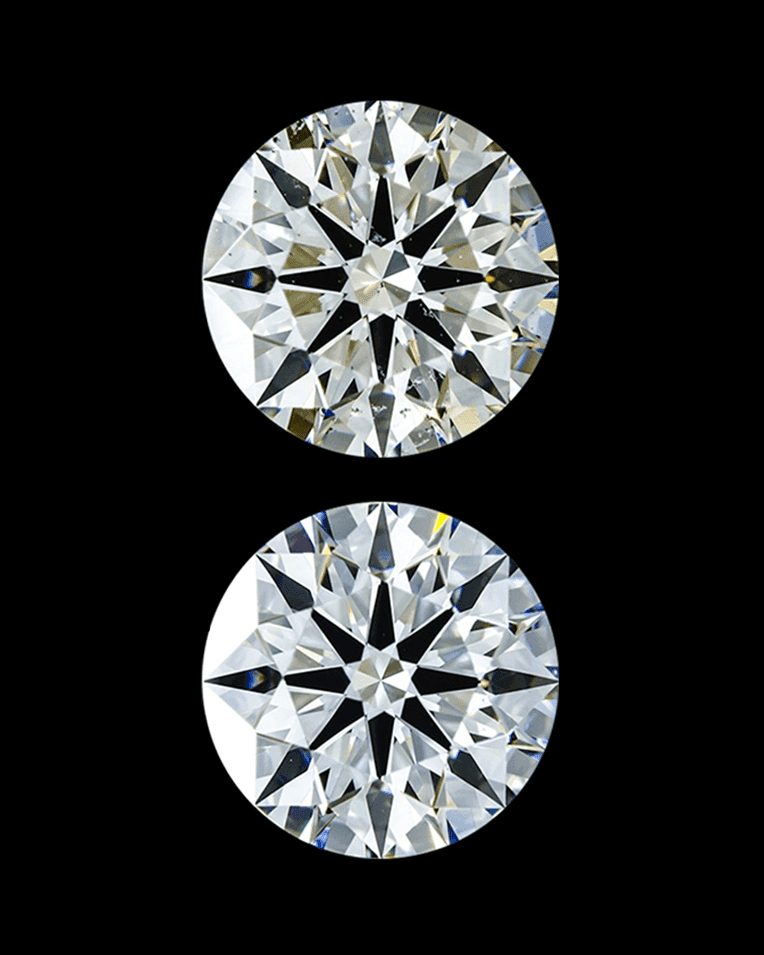
Diamond Clarity
Diamond clarity grades explained — from Flawless to I3. See what inclusions look like at each grade and learn which clarity offers the best value without visible flaws.
A diamond's clarity refers to the presence of impurities on and within the stone. When diamonds form naturally under extreme heat and pressure, imperfections in the crystal structure can develop, and tiny traces of natural elements are almost always trapped inside. These internal characteristics are called inclusions.
Diamond clarity is one of the four primary characteristics used to evaluate a stone — the 4Cs. The diamond with the highest clarity grade is one with a complete absence of any detectable imperfection. Internal natural impurities are classified as inclusions, while surface blemishes are considered external flaws.
A diamond's shape can influence its apparent clarity. Some shapes tend to hide inclusions, while those with broader table facets are more prone to visible flaws. Classic round-cut and princess-cut diamonds conceal imperfections well, whereas step-cut shapes such as the emerald or Asscher have larger, more open tables that are less forgiving.
Types of Inclusions
Inclusions can occur in various forms within a diamond. Understanding the common types helps to appreciate what graders are looking for:
- —Cavity — An external hole in the surface that can appear anywhere on the stone and may affect durability depending on its position
- —Chip or feather — Surface imperfections sometimes left during the cutting process, typically found along the edge of the stone
- —Knot — Drag marks from the polishing process that break the surface so minutely that only magnification can identify them
- —Needle and pinpoint — Tiny imperfections shaped as their name suggests, visible only at very high magnification
- —Cloud — A cluster of microscopic inclusions within the diamond that appear as a haze; generally translucent and often do not affect the clarity grade
- —Twinning wisp — A structural imperfection where inclusions twist together, a flaw found primarily in fancy diamond shapes
The Clarity Scale
Experts developed a standardised clarity scale in the mid-twentieth century, which was refined into a more detailed grading system in the 1970s. The following grades represent the full clarity scale:
FL — Flawless
Completely flawless with no internal or external inclusions of any kind. These are the rarest diamonds — fewer than 0.1% of all gem-quality diamonds fall into this category. A Flawless diamond is an exquisite symbol of perfection.
IF — Internally Flawless
No inclusions, with only very minute surface blemishes — typically minor details of polish such as polish lines. These blemishes do not affect sparkle and can only be detected by a skilled grader under 10x magnification. Extremely rare and genuinely gorgeous.
VVS1 — Very Very Slightly Included 1
Contains very minute inclusions that are extremely small and often undetectable even by diamond professionals under 10x magnification. VVS1 offers excellent value compared to FL or IF while maintaining virtually the same visual appeal. The most common inclusions at this grade are pinpoints and naturals.
VVS2 — Very Very Slightly Included 2
Similar to VVS1 but with inclusions that are slightly more visible under magnification. This grade is considered the best value among the higher clarities and does not compromise the diamond's brilliance. Common VVS2 inclusions include clouds, pinpoints, feathers and naturals.
VS1 — Very Slightly Included 1
Contains very minor inclusions that can only be seen under magnification and have minimal impact on sparkle. VS is a very popular clarity range. Common VS1 inclusions include clouds, feathers, needles, crystals and indented naturals.
VS2 — Very Slightly Included 2
Similar to VS1 with inclusions that appear slightly larger under magnification. Not noticeable to the unaided eye and extremely popular for its value proposition. VS2 diamonds tend to have a few more inclusions than VS1 and the sizes are slightly larger, while still remaining microscopic.
SI1 — Slightly Included 1
Considered fine quality, with visible imperfections under 10x magnification. An SI1 diamond will sparkle brilliantly even with its minor inclusions, which may be invisible to the unaided eye. SI1 is extremely popular for its value. Common inclusions are larger crystals, twinning wisps, feathers, clouds and knots.
SI2 — Slightly Included 2
Possesses high sparkle with clarity inclusions that may be visible without magnification when examined closely. Most SI2 inclusions are undetectable to the unaided eye in normal viewing conditions. SI clarity grades offer excellent value.
I1 — Included
An I1 diamond will still shine brightly despite eye-visible inclusions. The imperfections can be seen without magnification when the diamond is closely examined, depending on their size and location. MOH London does not carry diamonds in the I2 or I3 range, as inclusions at those grades begin to noticeably detract from the stone's beauty.
Visual Clarity Comparison
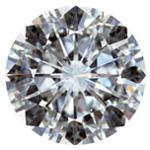
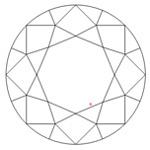
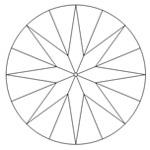
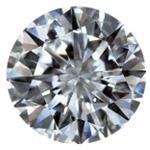
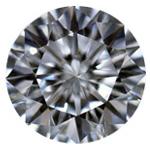
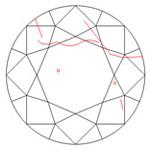
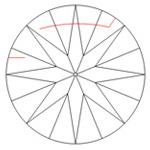
Select a clarity grade to see how inclusions appear at each level. Each grade shows three example diamonds — because no two diamonds have identical inclusions.
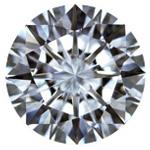
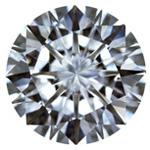
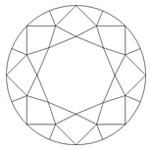
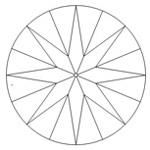
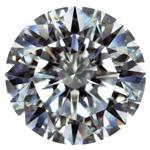
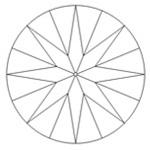
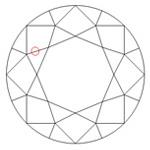
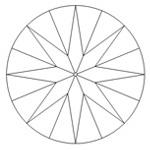
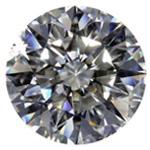
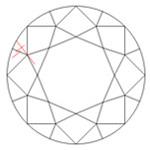
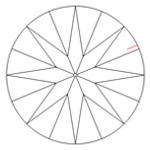
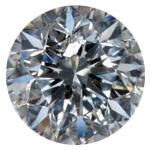
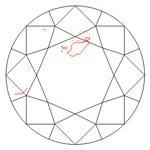
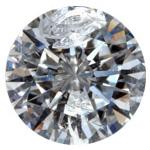
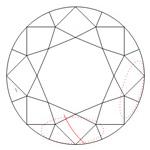
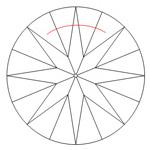
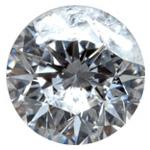
VS1: Very Slightly Included 1
Minor inclusions visible only under magnification. Invisible to the naked eye — an ideal choice.
Colour Grade Reference
| Grade | Category | Visible to Naked Eye? | Price Impact |
|---|---|---|---|
| FL | Flawless | No — rarest grade (<0.1% of diamonds) | Premium — highest clarity price |
| IF | Internally Flawless | No — surface blemishes only under 10× | Near-premium |
| VVS1 | Very Very Slightly Included | No — extremely difficult even under 10× | ~15-20% less than FL |
| VVS2 | Very Very Slightly Included | No — very difficult under 10× | Best value in high clarity |
| VS1 | Very Slightly Included | No — minor under magnification only | Sweet spot — excellent value |
| VS2 | Very Slightly Included | No — slightly larger under magnification | ~10-15% less than VS1 |
| SI1 | Slightly Included | Usually no — may be visible if large/central | ~30-40% less than VS1 |
| SI2 | Slightly Included | Sometimes — depends on inclusion type/position | ~40-50% less than VS1 |
Best Clarity for Your Budget
For most engagement rings, VS2 or SI1 offers the best balance of beauty and value. At these grades, inclusions are invisible to the naked eye — you get the same visual perfection as higher grades without paying for a difference you cannot see.
Shape matters when choosing clarity. Round brilliants are the most forgiving — their facet pattern breaks up and conceals inclusions effectively. You can comfortably choose SI1 in a round. Step cuts like emerald and Asscher have large, open tables that act like windows — inclusions are more visible, so VS2 or above is recommended for these shapes.
Carat weight also plays a role. Larger diamonds make inclusions more visible because there is simply more surface area to see them through. For diamonds over 2 carats, consider VS1 or above. For stones under 1 carat, SI1 is usually an excellent choice.
At MOH London, every diamond is individually inspected by our Hatton Garden gemmologists to confirm it is "eye-clean" before it reaches you. Book a free consultation to compare clarity grades in person — seeing the difference (or lack of it) is the best way to make a confident decision.
Frequently Asked Questions
What is the best diamond clarity?
For most buyers, VS2 offers the best combination of quality and value. It is classified as "Very Slightly Included" — inclusions exist but are invisible to the naked eye and only detectable under 10× magnification. Paying for VVS or Flawless grades buys microscopic perfection that cannot be appreciated without laboratory equipment.
Can you see inclusions in a VS2 diamond?
No — not with the naked eye. VS2 inclusions are only visible under 10× magnification and are considered "minor" by grading standards. In real-world wear, a VS2 diamond looks identical to a Flawless diamond. This is why VS2 is one of the most popular clarity grades for engagement rings.
Is SI1 clarity good for an engagement ring?
Yes — SI1 is an excellent choice, particularly for round brilliant diamonds. Most SI1 inclusions are invisible to the naked eye in normal viewing conditions. The savings compared to VS grades (typically 30-40%) can be significant and are better invested in cut quality or carat weight, which have a much greater impact on the diamond's visual appeal.
What is an eye-clean diamond?
An "eye-clean" diamond is one where no inclusions are visible to the naked eye when viewed face-up at a normal viewing distance (approximately 15-25cm). This typically includes diamonds graded VS2 and above, and many SI1 diamonds depending on the type and position of their inclusions. At MOH London, we individually verify that every diamond we sell is eye-clean.
Does diamond shape affect clarity?
Yes — significantly. Round brilliant diamonds conceal inclusions best due to their complex facet pattern that breaks up and scatters light. Step-cut shapes (emerald, Asscher, baguette) have large, flat facets that act like mirrors, making inclusions more visible. For step cuts, we recommend VS2 or above. For rounds, SI1 is usually safe.
Is Flawless clarity worth the price?
For most practical purposes, no. Flawless diamonds carry a significant premium (often 50-100% more than VS1) for perfection that is only detectable under laboratory magnification. The visual difference between FL and VS1 in a mounted ring is zero. Flawless diamonds are best appreciated by collectors or those who value the rarity and symbolism of absolute perfection.
Put Your Knowledge Into Practice
Browse certified diamonds or engagement ring settings — apply what you've learned to find your perfect stone.