Diamond Shape Guide
Heart
The heart-shaped diamond is the most expressive of all cuts — a brilliant-cut stone where the silhouette speaks as loudly as the sparkle.
56-58 facetsBrowse Heart Diamonds
About the Heart
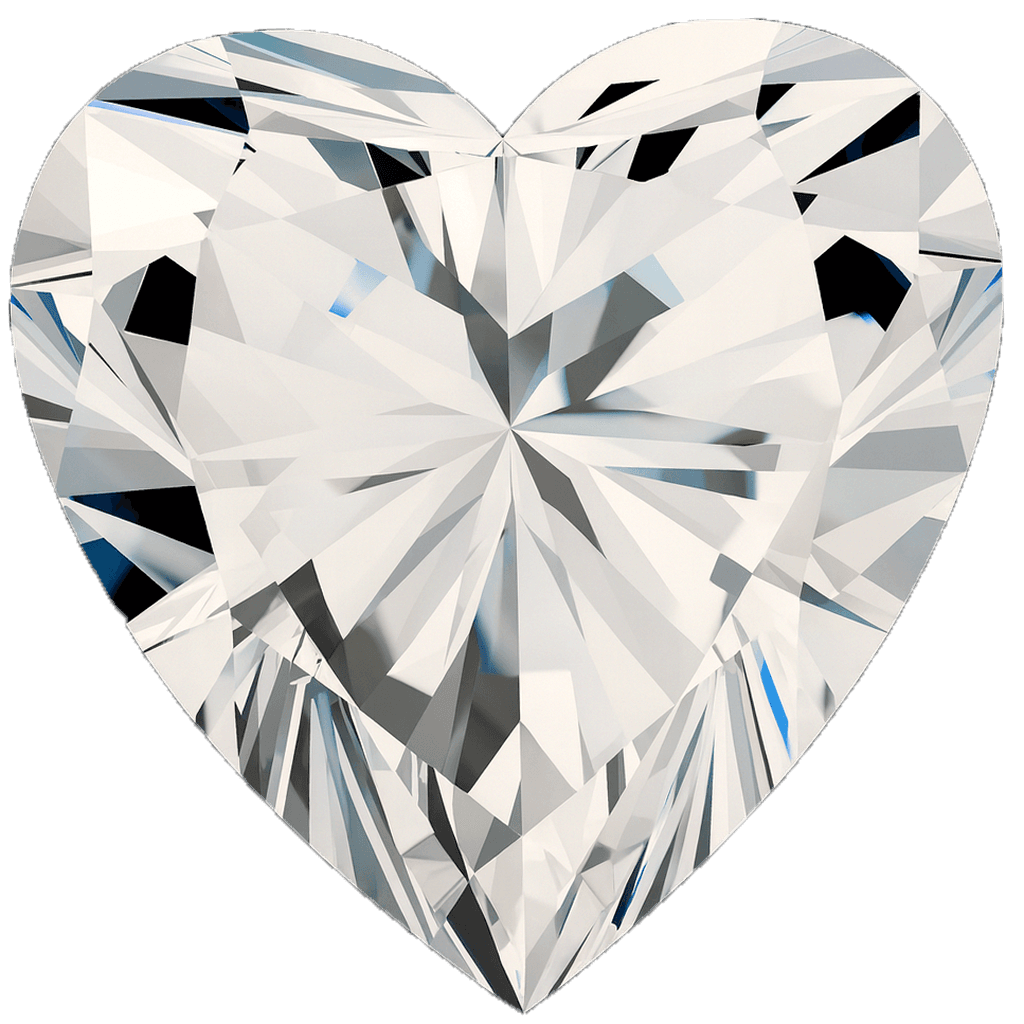
The heart-shaped diamond is the ultimate symbol of love — a modified brilliant cut where the distinctive cleft at the top creates an unmistakable silhouette. Cutting a heart-shaped diamond requires extraordinary skill: the two halves must be perfectly symmetrical, the cleft must be clean and well-defined, and the point must be sharp. When well-executed, the heart delivers the brilliance of a round with an emotional resonance that no other shape can match. Heart shapes are most effective in sizes above 0.50 carat, where the shape is clearly visible.
360° View
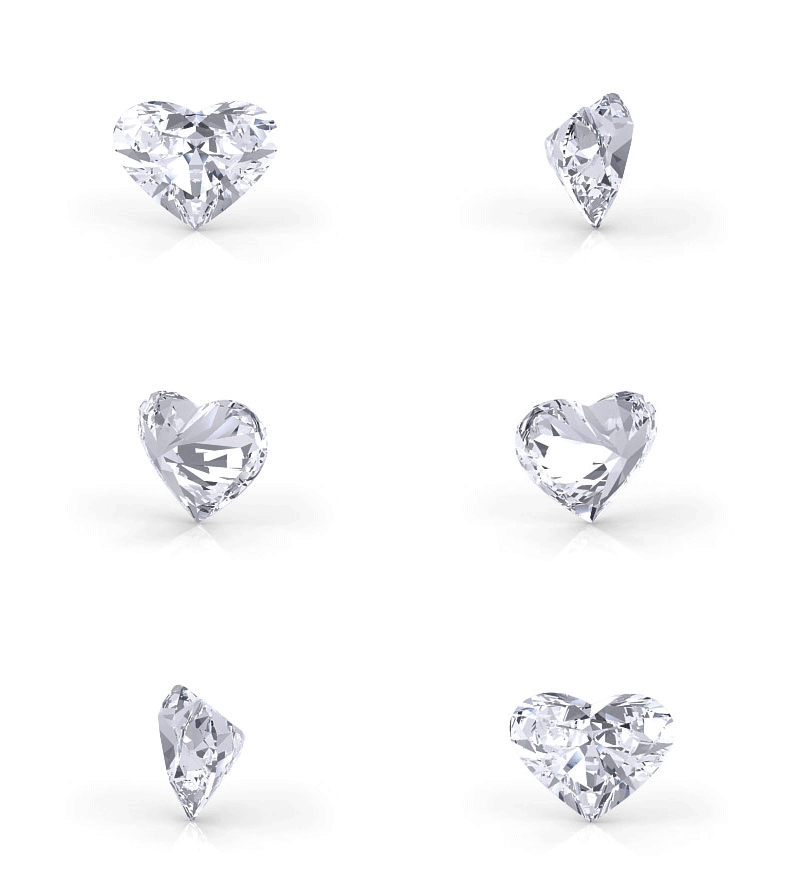
See how light moves through the heart cut
Characteristics
- Modified brilliant cut with distinctive cleft
- Symmetry is paramount — both halves must mirror
- Recognisable, expressive silhouette
- Romantic and sentimental
Ideal Settings
- Solitaire
- Bezel
- Pendant
- Three-stone
- V-prong
Advantages
- The most emotionally expressive diamond shape
- Excellent brilliance from brilliant-cut faceting
- Unique — immediately recognisable
- Strong sentimental value
Considerations
- Requires exceptional symmetry — poorly cut hearts look misshapen
- Below 0.50ct, the heart shape becomes difficult to discern
- The point needs protective setting
Size Guide
A 1-carat heart measures approximately 6.5 x 6.5mm. Hearts should be near-square in ratio (0.95-1.05:1). Below 0.50ct, the shape may not be clearly visible — we recommend 0.70ct and above.
History & Origins
The earliest known reference to a heart-shaped diamond dates to 1463, when Galeazzo Maria Sforza, Duke of Milan, mentioned one in a letter — describing it as an extraordinary gem. By the 1500s, heart-shaped diamonds were being exchanged between royalty as tokens of affection and diplomacy. The most famous early example: Mary Queen of Scots sent a heart-shaped diamond ring to Queen Elizabeth I in 1562 as a gesture of goodwill. Technically, the heart is a pear with a cleft cut into the rounded end. That sounds simple. It is not — cutting a heart-shaped diamond is one of the most demanding tasks in the trade.
Buying Advice
The two halves must be perfectly symmetrical — and because our eyes are trained to recognise hearts from childhood, even slight asymmetry is immediately obvious. The cleft should be distinct but not too deep. Go 0.50 carat or above; below that, the heart shape is hard to see clearly. The heart is the rarest shape in most jewellers' collections, partly because of the cutting difficulty and partly because demand is smaller. That rarity can work in your favour — you will not see another one at every dinner party.
Browse Heart Diamonds
Browse our live inventory of heart diamonds — GIA and IGI certified.