Diamond Shape Guide
Round Brilliant
The round brilliant cut is the world's most popular diamond shape — engineered for maximum light return and unparalleled fire.
58 facetsBrowse Round Brilliant Diamonds
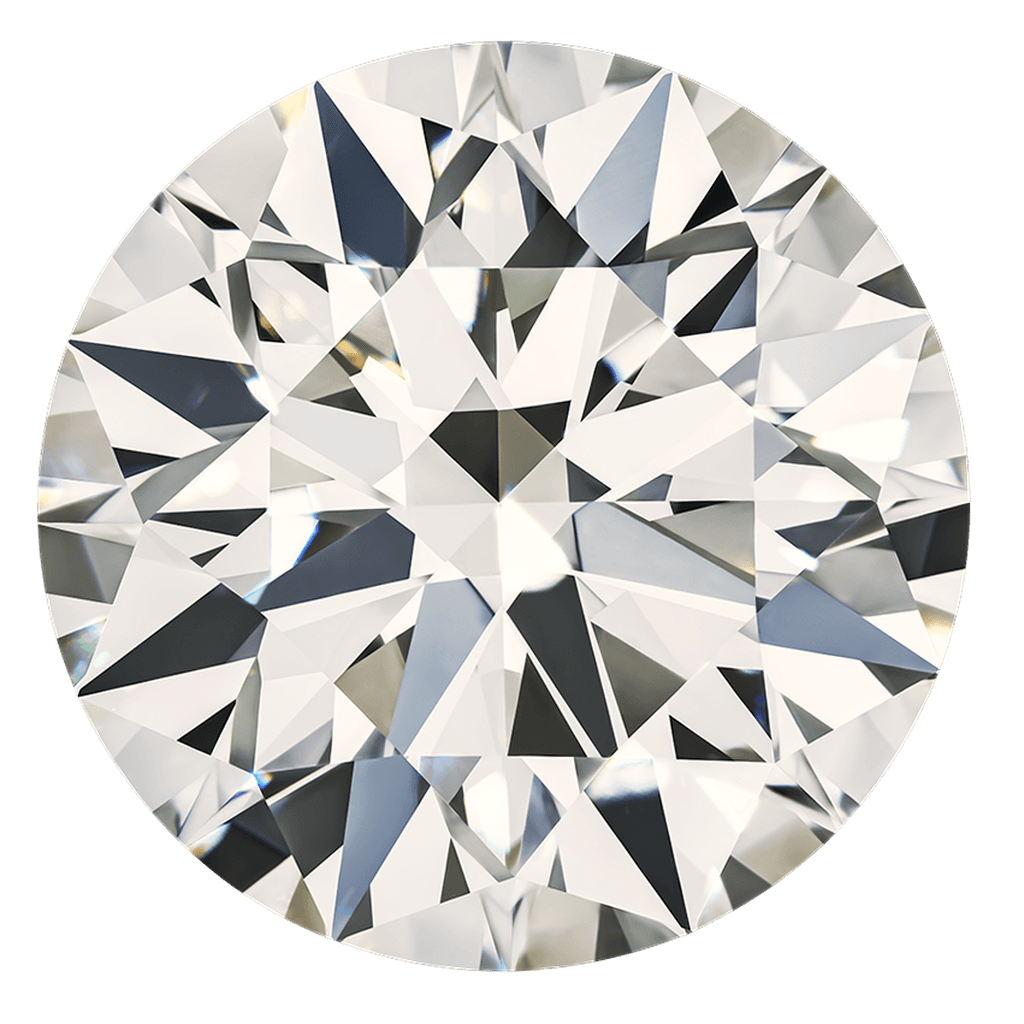
About the Round Brilliant
Developed over centuries and perfected in 1919 by Marcel Tolkowsky, the round brilliant cut features 58 precisely angled facets designed to maximise the return of light to the eye. It remains the benchmark against which all other shapes are measured — accounting for more than half of all diamonds sold worldwide, with some estimates closer to 70%. The mathematical precision of the cut means that a well-proportioned round brilliant will exhibit exceptional brilliance (white light reflection), fire (spectral colours), and scintillation (pattern of light and dark).
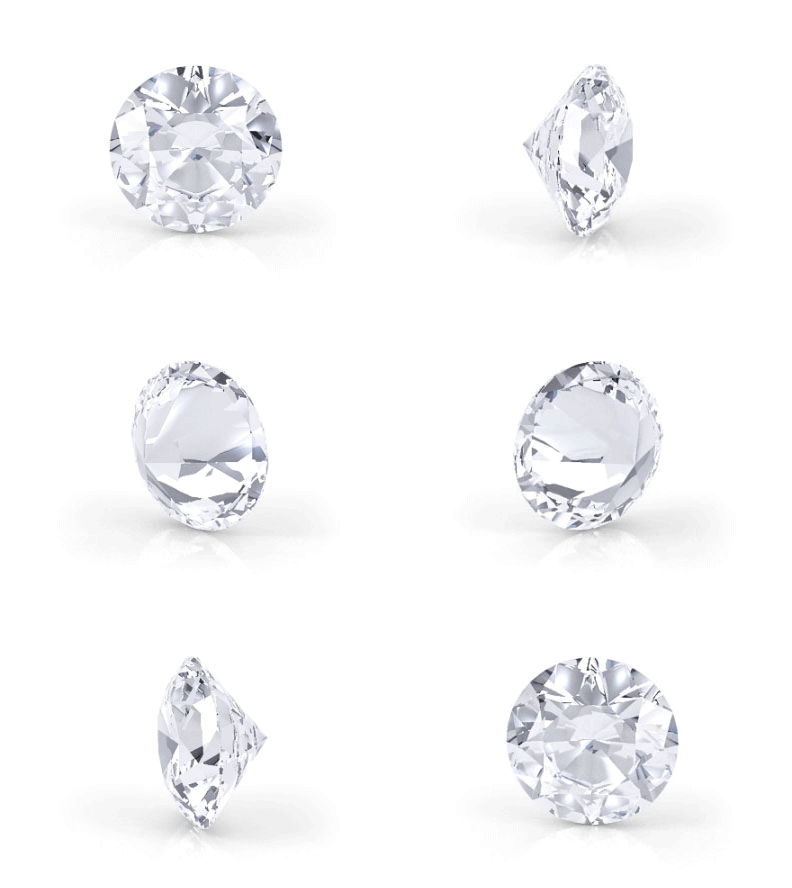
360° View
See how light moves through the round brilliant cut
Characteristics
- Maximum brilliance and fire of any shape
- Most forgiving of inclusions due to facet pattern
- Unmatched light performance when well-cut
- Classic, timeless silhouette
Ideal Settings
- Solitaire
- Four-prong
- Halo
- Pave band
- Three-stone
Advantages
- Superior light return — the most brilliant of all shapes
- Versatile — suits every setting style
- Most extensive cut grading data available
- Hides inclusions and colour better than step-cuts
Considerations
- Premium pricing due to rough wastage during cutting
- Smaller face-up size per carat than elongated shapes
- Ubiquity — less distinctive for those seeking uniqueness
Size Guide
A 1-carat round measures approximately 6.5mm in diameter. For a visible presence on the finger, most clients prefer 0.90ct and above. The round shape appears slightly smaller face-up than oval or marquise of the same carat weight.
History & Origins
Every diamond shape that exists today is, in some way, a response to the round brilliant. In 1919, a Belgian mathematician named Marcel Tolkowsky published his doctoral thesis "Diamond Design," in which he calculated the exact proportions needed to maximise a diamond's brilliance and fire simultaneously. His formula — 57 facets arranged in a precise geometric pattern — became the blueprint for every round brilliant cut since. What makes the round brilliant unusual is that it was not designed to save material. Every other shape tries to preserve as much of the rough crystal as possible. The round brilliant throws away half the stone to get the light right. That is why it costs more per carat — and why nothing else sparkles quite like it.
Round Brilliant vs Oval Brilliant
| Round Brilliant | Oval Brilliant | |
|---|---|---|
| Face-up size | 6.5mm at 1ct — standard | 7.7 × 5.7mm at 1ct — 10-15% larger |
| Brilliance | Maximum — benchmark for all cuts | Very high — comparable to round |
| Price per carat | Highest — most rough wastage | 10-20% less than round |
| Finger flattering | Classic, balanced | Elongates the finger |
| Bow-tie effect | None | Can appear — requires careful selection |
| Colour hiding | Excellent — facets mask warmth | Good but shows more than round |
| Popularity | #1 worldwide — majority of sales | #2 — fastest growing shape |
Buying Advice
The round brilliant is the safest diamond purchase — its light performance is well-documented and predictable. Always prioritise cut quality: an Excellent or Very Good cut round will outperform a larger stone with a lower cut grade. For colour, G-H is the sweet spot — rounds hide colour better than any other shape. For clarity, SI1 is often eye-clean in rounds, offering significant savings over VS2 with no visible difference. The biggest money-saving tip: consider 0.90-0.95ct instead of 1.00ct — visually identical but 15-20% less expensive.
Frequently Asked Questions
Why are round diamonds more expensive?
Round brilliants command a premium because the cutting process wastes more rough diamond material than any other shape — approximately 60% of the rough is lost during cutting. Additionally, round diamonds are the most popular shape (the majority of all sales), driving higher demand. Expect to pay 20-40% more per carat compared to fancy shapes like oval, cushion, or emerald.
What is the difference between round and brilliant?
"Round" describes the shape, "brilliant" describes the faceting pattern. A "round brilliant" is the specific combination of a circular outline with 58 precisely angled facets designed for maximum light return. Other shapes can also have brilliant faceting — oval brilliant, pear brilliant, cushion brilliant — but "round brilliant" is the most common and is often shortened to just "round" or "brilliant."
What is the best setting for a round diamond?
The classic four-prong solitaire is the most popular setting for round diamonds — it maximises light entry and lets the diamond speak for itself. A six-prong setting offers more security. Halo settings add visual size and sparkle. Pave bands add side sparkle without competing with the centre stone. The round diamond is uniquely versatile — it looks beautiful in virtually every setting style.
Round vs oval: which looks bigger?
An oval diamond will appear approximately 10-15% larger than a round of the same carat weight because its elongated shape spreads the weight over a larger surface area. If maximising perceived size is your priority, an oval offers more visual impact per carat. However, the round brilliant produces more intense sparkle — it depends on whether you value size or brilliance more.
Is a Very Good cut round diamond worth buying?
Absolutely. Very Good cut rounds offer about 95% of the light performance of an Excellent cut at a 10-15% lower price. The difference between Excellent and Very Good is subtle — detectable by a gemmologist with instruments but rarely visible to the naked eye in normal wear. Many of our clients choose Very Good cut to allocate the savings toward a higher carat weight or colour grade.
Browse Round Brilliant Diamonds
Browse our live inventory of round brilliant diamonds — GIA and IGI certified.