Diamond Shape Guide
Princess
The princess cut is a brilliant square with exceptional sparkle and a contemporary aesthetic — the second most popular shape after round.
50-58 facetsBrowse Princess Diamonds
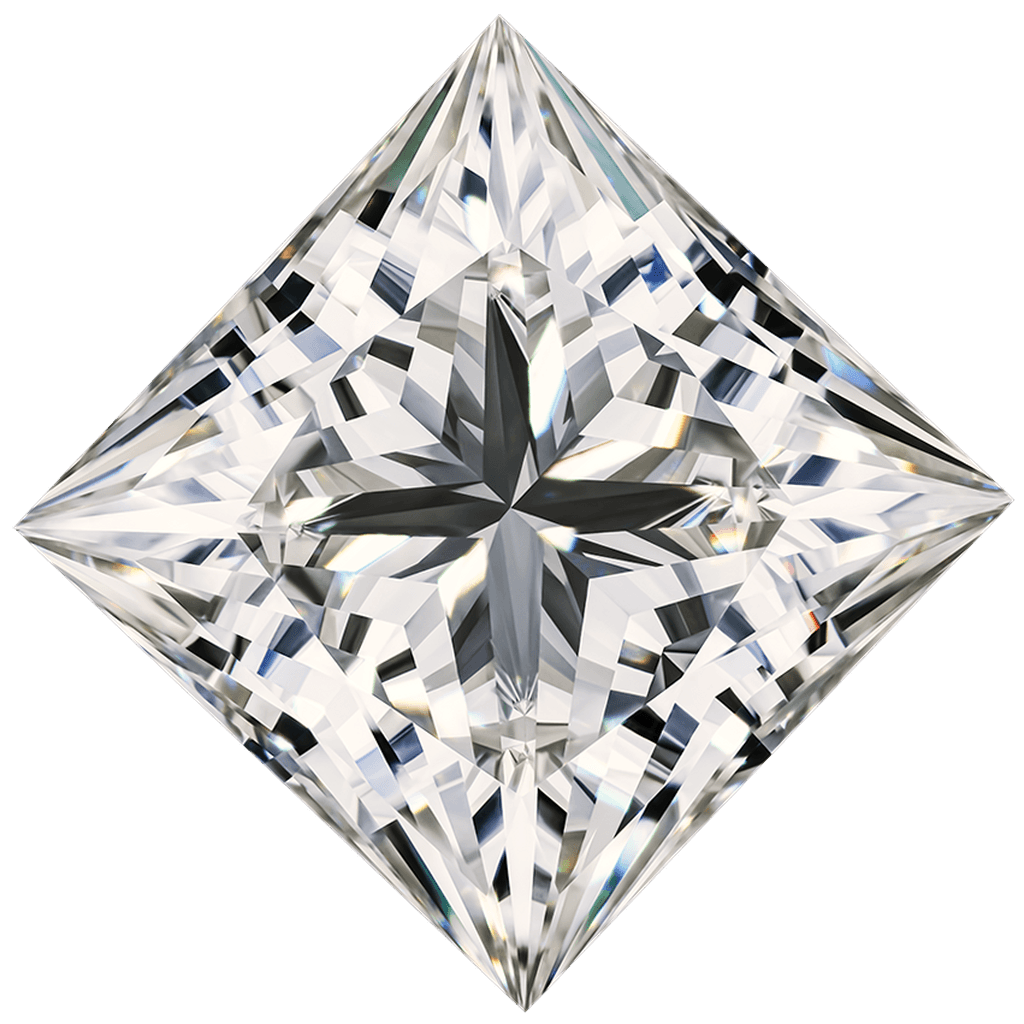
About the Princess
Invented in 1979 by Betzalel Ambar, Israel Itzkowitz, and Ygal Perlman, the princess cut is the most popular fancy shape diamond. Its sharp, uncut corners and brilliant-style faceting produce exceptional fire and scintillation in a modern square format. The princess cut retains approximately 80% of the rough diamond crystal — more than almost any other shape — which contributes to its attractive pricing. The geometric lines of the princess make it a favourite for contemporary and architectural ring designs, and it pairs beautifully with channel-set side stones.
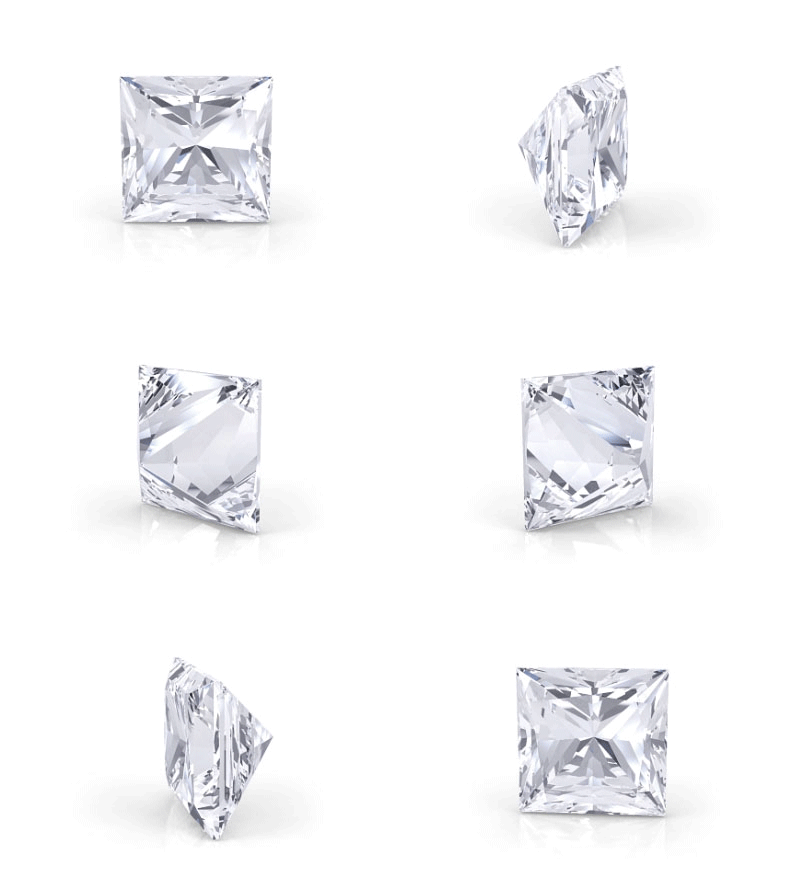
360° View
See how light moves through the princess cut
Characteristics
- Square or near-square with sharp corners
- Brilliant-style faceting for maximum sparkle
- Excellent rough retention — good value
- Modern, geometric aesthetic
Ideal Settings
- Channel
- Bezel (protective)
- V-prong
- Princess halo
- Solitaire
Advantages
- Strong brilliance in a modern square shape
- Excellent value — high rough retention keeps prices lower
- Contemporary aesthetic that suits modern settings
- Clean geometric lines
Considerations
- Sharp corners are vulnerable to chipping — protective settings essential
- Can show colour more than rounds in the corners
- Difficult to assess proportions without expert guidance
Size Guide
A 1-carat princess measures approximately 5.5 x 5.5mm. The ideal length-to-width ratio for a square is 1.00-1.05:1. Always ensure corner prongs are included in the setting for protection.
Princess vs Cushion Cut
| Princess | Cushion Cut | |
|---|---|---|
| Shape | Square with sharp corners | Square/rectangle with rounded corners |
| Corner protection | V-prong or bezel essential — corners chip | No protection needed — rounded corners |
| Sparkle | Intense — brilliant-style faceting | Chunky brilliance — broad light flashes |
| Price per carat | 25-35% less than round | 25-35% less than round |
| Colour visibility | Shows colour in corners — G+ recommended | Moderate — H-I acceptable |
| Clarity needs | SI1 often eye-clean | SI1 often eye-clean |
| Aesthetic | Modern, geometric, architectural | Romantic, vintage, soft |
Best Settings for Princess Diamonds
V-prong solitaire
V-shaped prongs wrap around each corner, protecting the sharp edges while keeping the design minimal. The most popular choice for princess-cut engagement rings.
Channel setting
Princess-cut side stones fit perfectly into a channel — the square shape tessellates without gaps. Creates a sleek, modern band with continuous sparkle.
Bezel
A full bezel surrounds the entire stone, providing maximum protection for the corners. Ideal for active lifestyles where the ring may encounter daily wear.
Halo
A halo of round brilliants softens the sharp geometry of the princess while adding visual size and sparkle contrast.
Buying Advice
The princess cut offers excellent value — it retains more rough diamond material during cutting than rounds, making it 25-35% less expensive per carat. Always insist on a protective setting (V-prong, bezel, or channel) for the corners — this is non-negotiable. For colour, the sharp corners can concentrate colour, so we recommend G or better. For clarity, SI1 is usually eye-clean. The ideal ratio for a square princess is 1.00-1.05:1 — anything above 1.10 starts to look rectangular.
Frequently Asked Questions
Are princess cut diamonds good for engagement rings?
Excellent. The princess cut is the second most popular shape for engagement rings after round. It offers strong brilliance in a modern square format at a lower price per carat. The only consideration is that the sharp corners need a protective setting (V-prong or bezel) to prevent chipping.
Princess cut vs cushion: which is better?
It depends on your aesthetic preference. Princess cuts have sharp, geometric lines that suit modern, architectural designs. Cushion cuts have rounded corners and a softer, more romantic character. Both offer excellent value compared to round brilliants. Princess cuts tend to show slightly more sparkle; cushion cuts show more fire (rainbow flashes).
Do princess cut diamonds chip easily?
The sharp corners are the most vulnerable points. However, with an appropriate setting (V-prong, bezel, or channel) that protects the corners, princess-cut diamonds are perfectly durable for daily wear. We would never recommend a princess in an exposed setting that leaves the corners unprotected.
What clarity is best for princess cut?
SI1 (Slightly Included 1) is typically eye-clean in princess cuts — the brilliant faceting pattern does a good job of masking inclusions. VS2 is the safe choice if you want certainty. Avoid SI2 and below as inclusions become more likely to be visible.
Browse Princess Diamonds
Browse our live inventory of princess diamonds — GIA and IGI certified.