Diamond Shape Guide
Pear
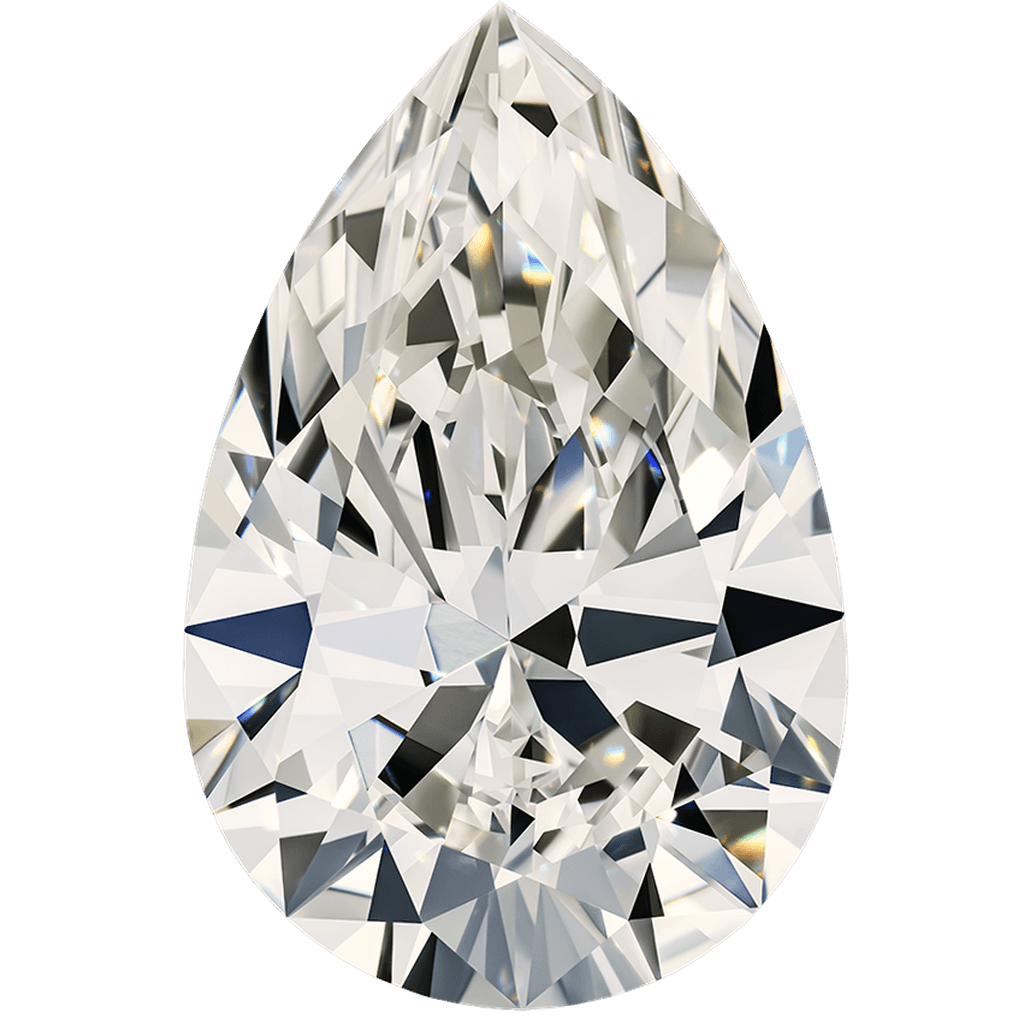
The pear-shaped diamond — also called a teardrop — combines the brilliance of the round with the elongating silhouette of the marquise.
56-58 facetsBrowse Pear Diamonds
About the Pear
The pear shape is traditionally credited to Lodewyk van Bercken around 1458, and remains one of the most distinctive diamond cuts. Combining a rounded end with a single point, the pear creates a unique teardrop silhouette that is both dramatic and flattering. When worn with the point facing the fingertip, it elongates the finger beautifully. The pear is equally striking set north-south or east-west, and is a natural choice for pendants and drop earrings as well as engagement rings. The asymmetric shape makes each stone feel individual and expressive.
360° View
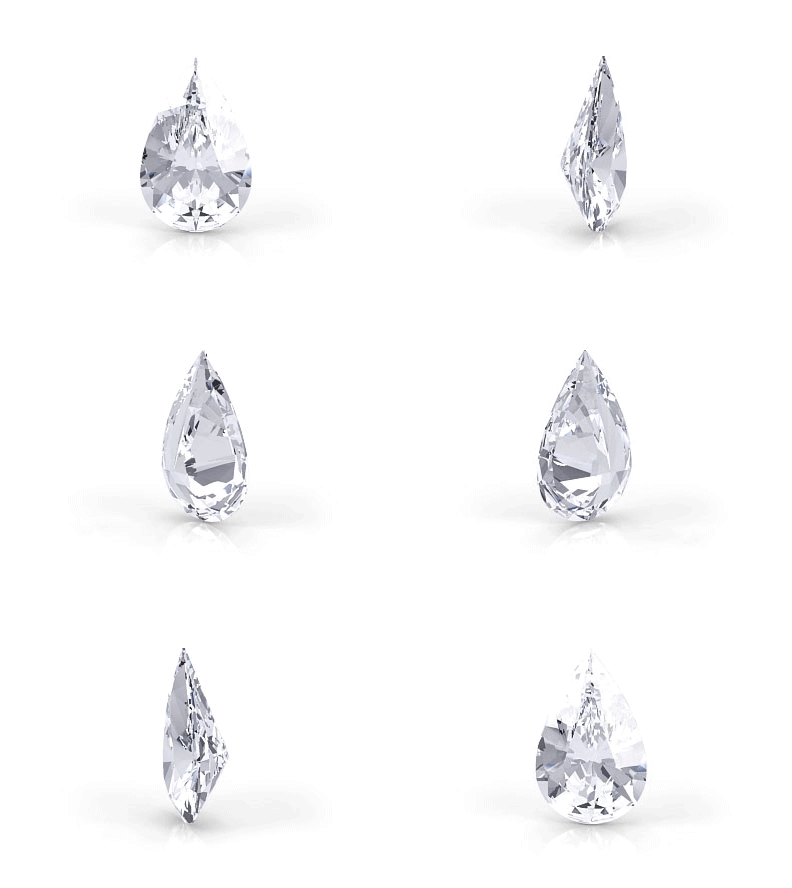
See how light moves through the pear cut
Characteristics
- Teardrop silhouette — rounded end meets a point
- Brilliant-cut faceting for strong fire
- Can be worn north-south or east-west
- Elongating effect on the hand
Ideal Settings
- North-south solitaire
- East-west
- Halo
- Drop pendant
- V-prong
Advantages
- Unique, expressive silhouette
- Elongates the finger when worn point-up
- Versatile orientation — north-south or east-west
- Beautiful as pendants, earrings, and rings
Considerations
- Point is vulnerable — requires a V-prong or bezel tip
- Can show a bow-tie shadow if poorly proportioned
- Symmetry is critical — must be carefully selected
Size Guide
A 1-carat pear measures approximately 8.0 x 5.2mm. Look for a length-to-width ratio of 1.45-1.65:1 for classic proportions. Always protect the point with a V-prong or bezel tip.
History & Origins
The pear shape is traditionally credited to Lodewyk van Bercken, a Flemish polisher who is said to have invented the diamond polishing wheel (the scaif) around 1458. Whether van Bercken was a real individual or a semi-legendary figure — historians still debate this — the pear shape itself is documented from the mid-15th century. What is certain is that by the late 1400s, pear-shaped diamonds were prized across European courts. For centuries the pear was primarily a pendant stone — the teardrop shape hangs beautifully on a chain. Its popularity in engagement rings is more recent, picking up momentum in the 2020s alongside a broader shift toward shapes that feel personal and distinctive.
Buying Advice
Pear-shaped diamonds are among the hardest to cut well. The point has to be perfectly centred. The two curved sides have to match. The "shoulders" — where the curve transitions to the point — have to be smooth, not angular. And like the oval, a poorly cut pear will show a bow-tie shadow across the middle. This is one shape where we would strongly suggest seeing the stone before buying, or at the very least working with a jeweller who has already screened for these issues. For the ratio, 1.50-1.70 feels right — below 1.45 looks stubby, above 1.80 starts looking fragile. The point needs a V-prong to protect it; do not skip this.
Browse Pear Diamonds
Browse our live inventory of pear diamonds — GIA and IGI certified.