Diamond Shape Guide
Emerald
The emerald cut's step-cut facets create a sophisticated hall-of-mirrors effect that rewards high-clarity stones and quiet confidence.
57 step-cut facetsBrowse Emerald Diamonds
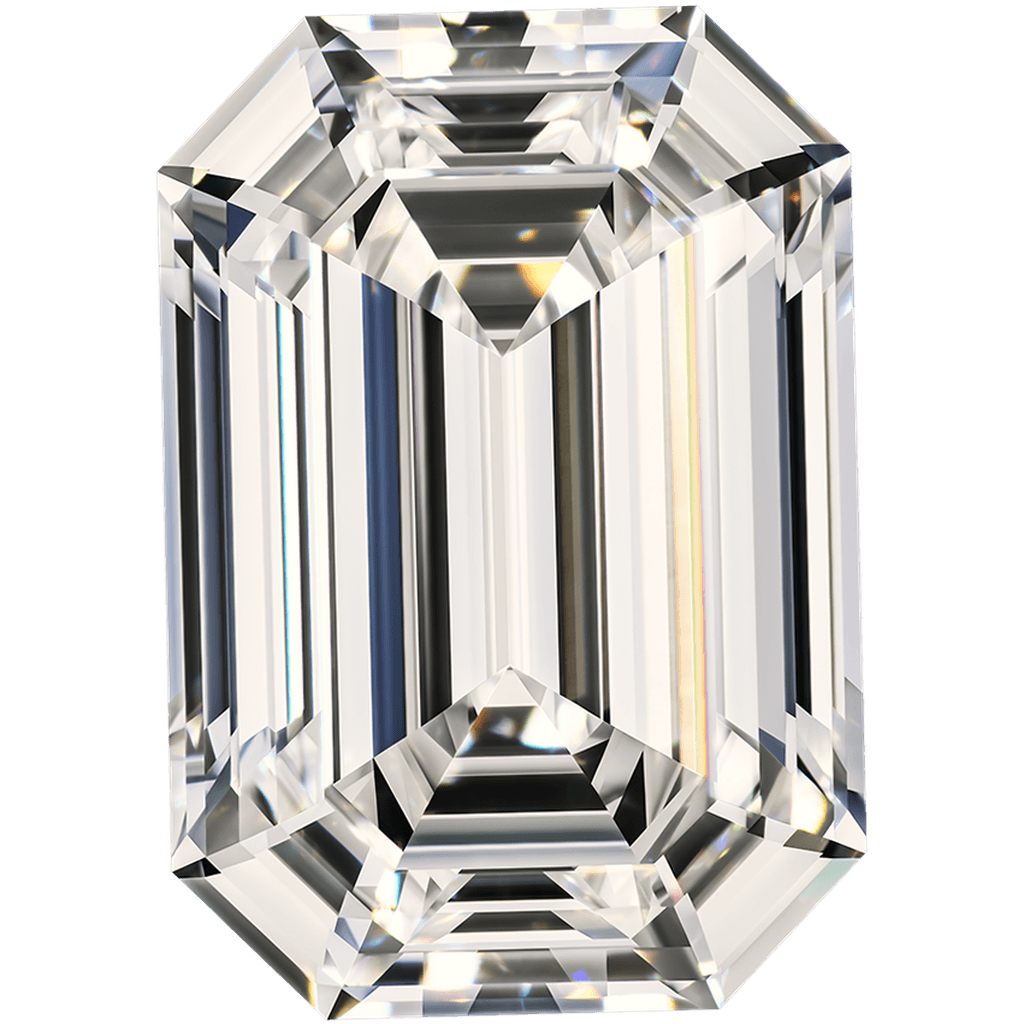
About the Emerald
Originally developed for cutting emerald gemstones (hence the name), this step-cut shape features long, parallel facets that create a distinctive "hall of mirrors" optical effect. Rather than the sparkle of brilliant cuts, the emerald produces broad, dramatic flashes of light and dark — an effect prized by connoisseurs. The open table (large flat top facet) makes clarity the most important consideration: inclusions are more visible than in brilliant cuts. The emerald cut is the diamond of architects, designers, and those who prefer understated elegance over overt sparkle.
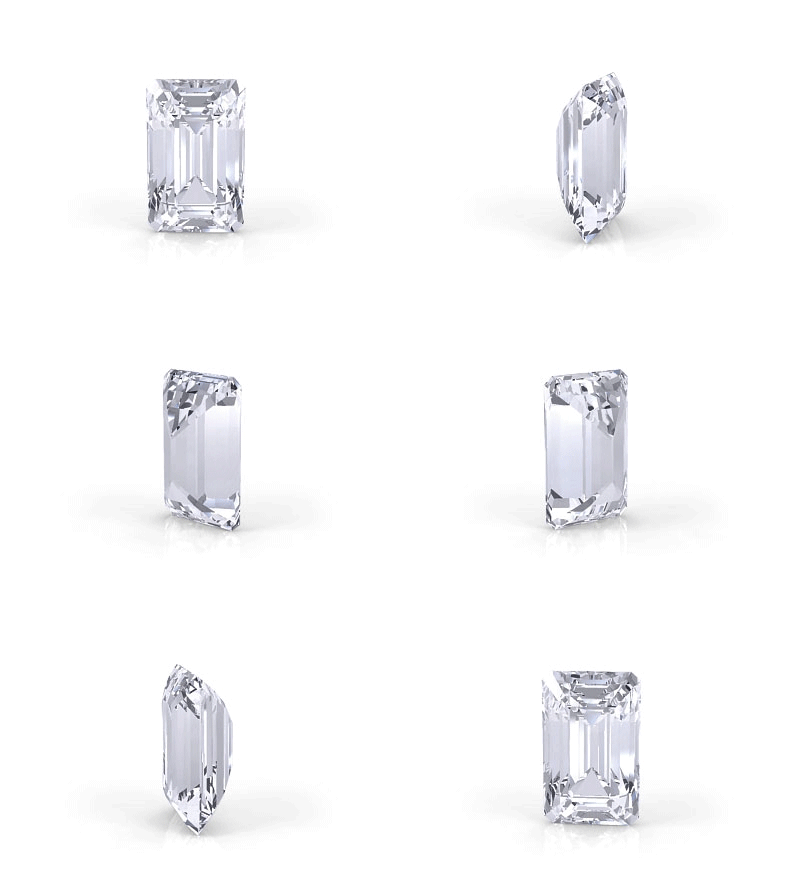
360° View
See how light moves through the emerald cut
Characteristics
- Rectangular step-cut with cropped corners
- Hall-of-mirrors optical effect
- Large open table reveals clarity
- Art Deco elegance and sophistication
Ideal Settings
- Solitaire
- Three-stone
- East-west bezel
- Minimal pave
- Art Deco
Advantages
- Uniquely sophisticated — understated elegance
- Large face-up appearance relative to carat weight
- Excellent for showcasing high-clarity stones
- Art Deco character suits vintage and modern settings
Considerations
- Inclusions and body colour are more visible
- Requires VS2 clarity or better for eye-clean appearance
- Less fire and brilliance than brilliant-cut shapes
Size Guide
A 1-carat emerald measures approximately 6.7 x 5.0mm. The classic length-to-width ratio is 1.30-1.50:1. Due to the open table, opt for VS2 clarity or better and colour grades G and above.
History & Origins
The name gives away the origin. This cut was developed in the 1500s for emerald gemstones, which are naturally brittle and prone to cracking. Stonecutters needed a shape that reduced stress during cutting, so they came up with a rectangular outline with stepped facets and clipped corners. Diamond cutters adopted the technique, and the term "emerald cut" became standard in the 1920s when the Art Deco movement embraced its clean lines and geometric precision. That association is not a coincidence — Art Deco was obsessed with geometry, ordered repetition, and the beauty of restraint. The emerald cut embodies all of those values.
Emerald vs Cushion Cut
| Emerald | Cushion Cut | |
|---|---|---|
| Faceting | Step-cut — parallel facets | Brilliant-cut — triangular/kite facets |
| Sparkle type | Broad flashes (hall-of-mirrors) | Chunky brilliance and fire |
| Clarity needs | VS2+ essential — open table reveals inclusions | SI1 often eye-clean — facets mask flaws |
| Colour visibility | Shows colour — recommend G or better | Hides colour — H-I acceptable |
| Face-up size | Large — elongated shape spreads weight | Slightly smaller — deeper cut |
| Profile | Rectangular with cropped corners | Square/rectangle with rounded corners |
| Price per carat | 20-30% less than round | 25-35% less than round |
Best Settings for Emerald Diamonds
Solitaire
The clean lines of the emerald cut are best showcased in a minimal setting — a four-prong solitaire lets the stone's geometry speak for itself without distraction.
Three-stone
Flanking the emerald centre with two tapered baguette side stones creates a seamless Art Deco composition that amplifies the step-cut aesthetic.
East-west bezel
Setting the emerald horizontally across the finger is a modern, architectural choice that makes the stone appear even larger.
Halo
A halo of round brilliants adds the sparkle that the emerald cut itself doesn't produce — creating contrast between the calm centre and glittering frame.
Buying Advice
The emerald cut rewards quality over size. Because the large, open table acts like a window into the stone, clarity is more important here than for any brilliant cut — we recommend VS2 or above. Colour also shows more readily, so consider G or better (H at most). The ideal length-to-width ratio is personal: 1.30-1.40 for a more square look, 1.45-1.55 for classic proportions, 1.60+ for a dramatically elongated rectangle. Always view the stone in person or request a high-resolution image to check for the "windowing" effect (a transparent area in the centre with no light return).
Frequently Asked Questions
Are emerald cut diamonds cheaper?
Yes — emerald cuts are typically 20-30% less expensive per carat than round brilliants. The step-cut faceting wastes less rough diamond material during cutting, reducing production costs. However, you may need to spend more on clarity (VS2+) and colour (G+) to avoid visible flaws, which can partially offset the savings.
Do emerald cut diamonds sparkle?
Emerald cuts produce a different kind of sparkle. Instead of the intense, pinpoint scintillation of a round brilliant, they create broad, dramatic flashes of light and dark — often described as a "hall of mirrors" effect. This is a deliberate design choice, not a shortcoming. Many people prefer the sophisticated, architectural quality of an emerald's light play.
What is the best ratio for an emerald cut?
The classic length-to-width ratio is 1.35-1.50:1. Ratios below 1.30 appear more square (closer to Asscher), while ratios above 1.55 appear dramatically elongated. There is no objectively correct ratio — it is entirely a matter of personal aesthetic. View several ratios side by side before deciding.
Emerald cut vs radiant cut — what is the difference?
Both are rectangular, but the faceting is completely different. Emerald cuts use step-cut faceting (parallel lines) producing broad light flashes. Radiant cuts use brilliant faceting (triangular facets) producing intense sparkle. If you love the rectangular shape but want maximum sparkle, choose radiant. If you prefer understated elegance and dramatic light play, choose emerald.
Browse Emerald Diamonds
Browse our live inventory of emerald diamonds — GIA and IGI certified.