Diamond Shape Guide
Marquise
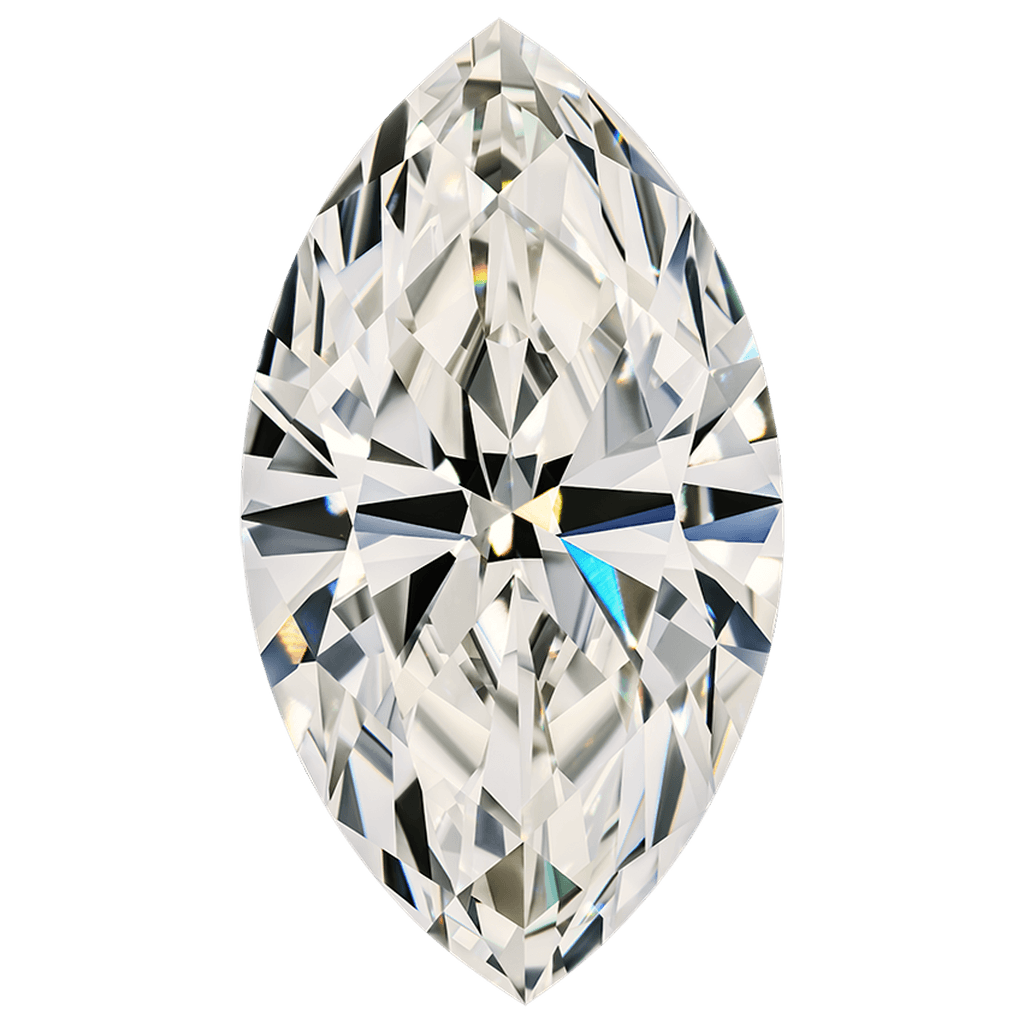
The marquise diamond's elongated form with pointed ends creates one of the largest face-up appearances of any shape.
56-58 facetsBrowse Marquise Diamonds
About the Marquise
Legend holds that King Louis XV of France commissioned a diamond cut to resemble the smile of his mistress, the Marquise de Pompadour — and the marquise was born. Its elongated boat shape with two pointed ends creates the largest face-up area of any diamond shape relative to carat weight, making it an exceptional value choice. The marquise elongates the finger dramatically and makes an unforgettable statement. While it fell from fashion briefly, the marquise has returned as a favourite of those who appreciate its regal heritage and dramatic proportions.
360° View
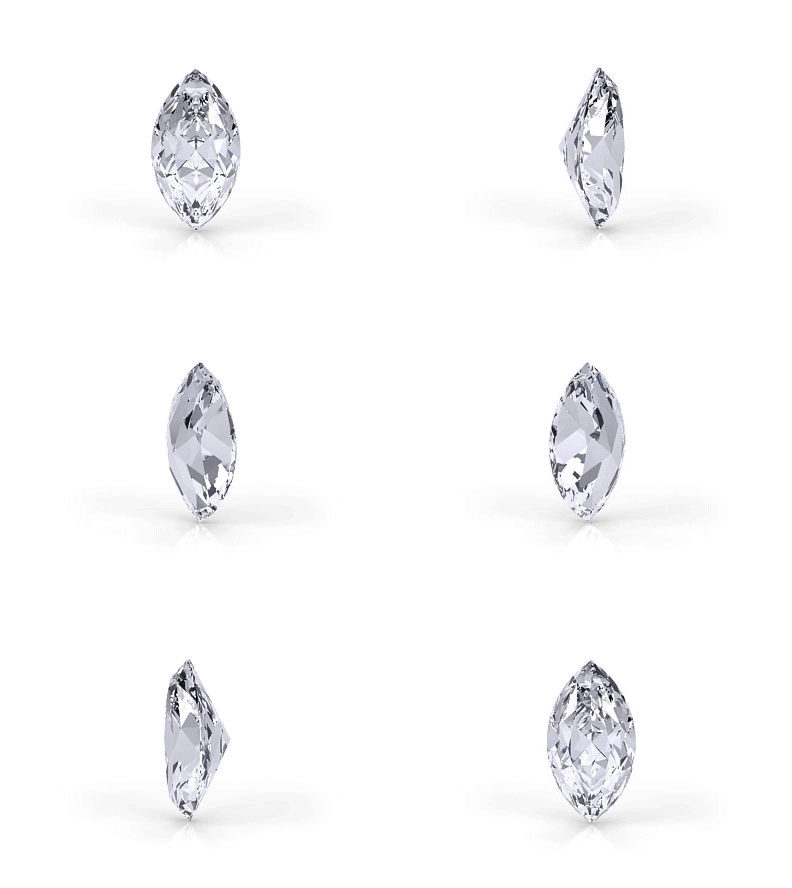
See how light moves through the marquise cut
Characteristics
- Elongated boat shape with two pointed ends
- Largest face-up appearance of any shape per carat
- Dramatic, regal silhouette
- Brilliant-cut faceting
Ideal Settings
- Six-prong
- East-west
- Stacking
- Pendant
- Bezel
Advantages
- Appears largest of any shape at equal carat weight
- Dramatically elongates the finger
- Regal, distinctive aesthetic — stands apart
- Excellent carat-weight-to-size ratio
Considerations
- Both points are vulnerable — require protective prongs
- Can show a bow-tie shadow if poorly proportioned
- Must be set precisely straight on the finger
Size Guide
A 1-carat marquise measures approximately 10.0 x 5.0mm — significantly larger face-up than any other 1-carat shape. The ideal length-to-width ratio is 1.75-2.15:1. Ensure both points are protected with V-prongs.
History & Origins
In 1745, King Louis XV of France commissioned his court jeweller to create a diamond shape that resembled the smile of his mistress, the Marquise de Pompadour. The resulting shape — elongated, pointed at both ends, curved through the middle — was named after her title. The French also call it the "navette," meaning "little ship," because the outline resembles a boat's hull. Early marquise diamonds were less precise, but advances in cutting technology through the 18th and 19th centuries refined the facet arrangement into the modern 58-facet brilliant pattern. The marquise reached peak popularity between the 1960s and 1980s, fell quiet for a while, and is now returning as a favourite among those who appreciate its regal heritage.
Buying Advice
The practical case for the marquise: of all diamond shapes, it has the largest face-up surface area relative to its carat weight. A 1-carat marquise can appear as large as a 1.5-carat round because the elongated outline spreads weight across a bigger visible area. If maximising how big the stone looks is a priority, the marquise wins. Check for bow-tie (same as oval and pear), demand good symmetry (both pointed ends should match), and make sure the setting protects those two delicate points with V-prongs. The ideal length-to-width ratio is 1.75-2.15 — this is the widest range of any shape, and it dramatically changes how the stone looks.
Browse Marquise Diamonds
Browse our live inventory of marquise diamonds — GIA and IGI certified.