Diamond Shape Guide
Oval
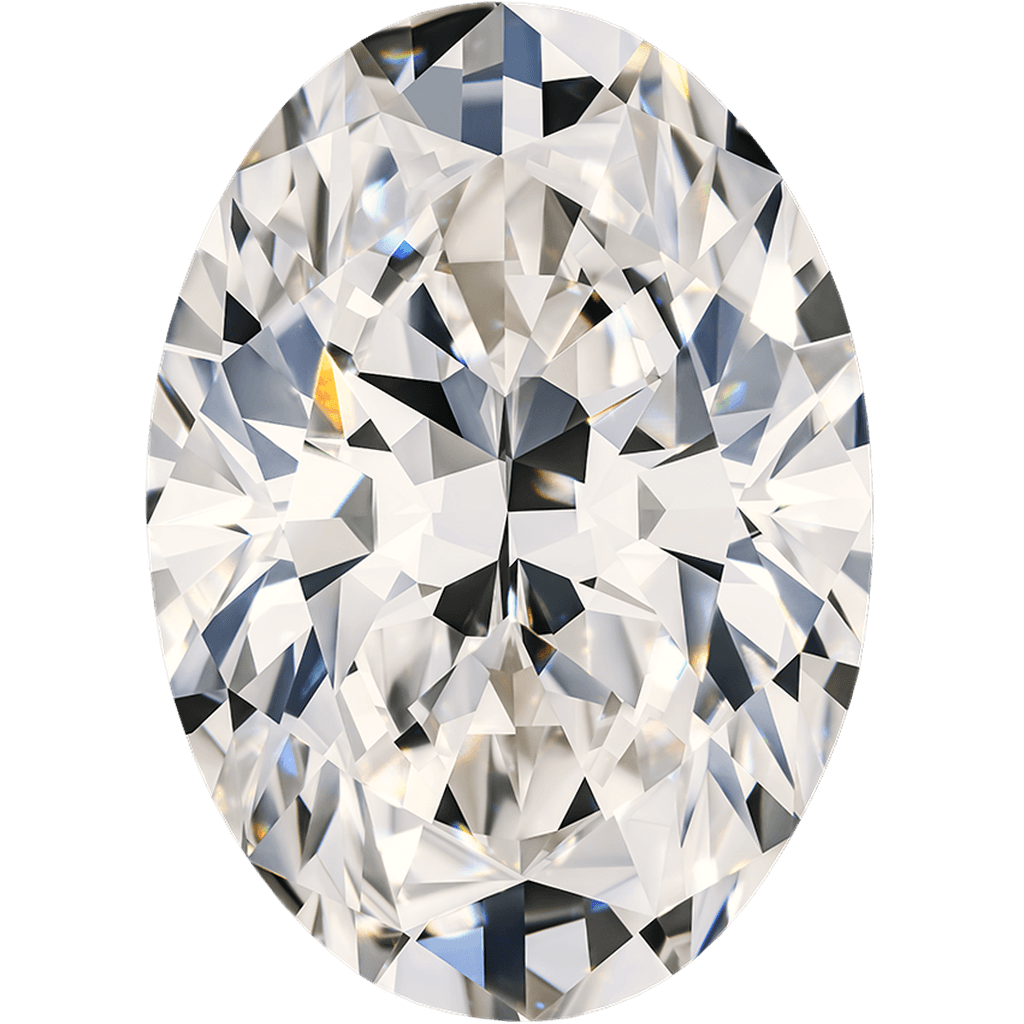
The oval diamond combines brilliant faceting with an elongated shape — creating an illusion of greater size and a flattering presence on the finger.
56-58 facetsBrowse Oval Diamonds
About the Oval
Created by Lazare Kaplan in 1957, the oval brilliant cut offers the fire and brilliance of a round with a more distinctive, elongated profile. Its shape creates a larger face-up appearance than a round of equal carat weight, and its elongated form flatters the finger, making it appear longer and more slender. The oval has experienced a remarkable resurgence in popularity, becoming the preferred choice for modern engagement rings. Its lack of sharp corners also makes it durable and suitable for active lifestyles.
360° View
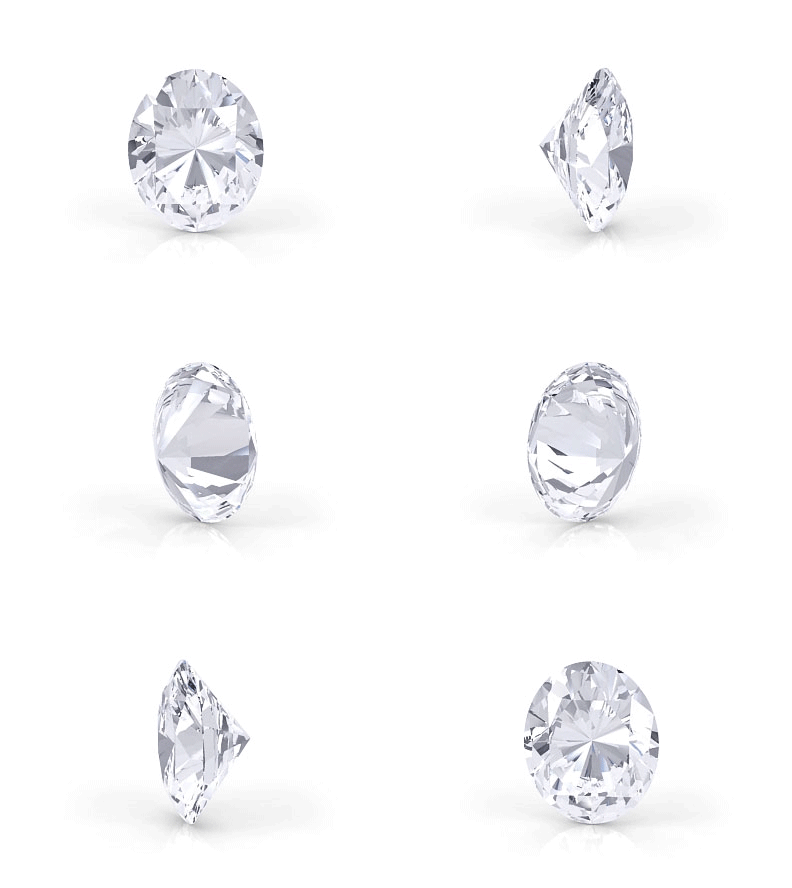
See how light moves through the oval cut
Characteristics
- Elongated brilliant-cut silhouette
- Face-up larger than a round of equal weight
- Flatters the finger with its elongating shape
- No sharp corners — excellent durability
Ideal Settings
- East-west
- Solitaire
- Three-stone
- Bezel
- Hidden halo
Advantages
- Appears larger than round diamonds of the same carat weight
- Elongating effect on the finger
- Excellent brilliance — comparable to round
- Very fashionable with strong resale appeal
Considerations
- Can exhibit a "bow-tie" shadow across the centre
- Length-to-width ratio is a matter of personal preference
- Requires careful selection to avoid dark zones
Size Guide
A 1-carat oval measures approximately 7.7 x 5.7mm. The ideal length-to-width ratio is 1.30-1.50:1 for classic proportions. Ovals face up 10-15% larger than rounds of equal weight.
History & Origins
Lazare Kaplan invented the oval in 1957. He was already famous in the diamond world — a Russian-born cutter who had built his reputation on salvaging rough stones that other cutters refused to touch. His idea was straightforward: take the round brilliant's facet pattern and stretch it. Keep the sparkle, change the silhouette. For decades the oval stayed quiet — respected by people in the trade, but not what most customers asked for. Then around 2018 it exploded. Instagram, celebrity proposals, a general shift toward shapes that felt distinctive without being risky. It is now one of the most requested shapes at Hatton Garden workshops across London.
Buying Advice
Two things matter more in an oval than in most shapes. First, symmetry — the two halves should mirror each other, and because ovals are shaped partly by hand, not all of them do. Second, the bow-tie: a dark shadow that can appear across the centre when the facets are not angled well. Some bow-tie is normal; a heavy one kills the stone. For colour, G-H is the sweet spot. For clarity, SI1 is often eye-clean. The ideal length-to-width ratio is 1.35-1.50 — below 1.30 looks chubby, above 1.55 starts looking thin.
Browse Oval Diamonds
Browse our live inventory of oval diamonds — GIA and IGI certified.