Diamond Shape Guide
Rose Cut
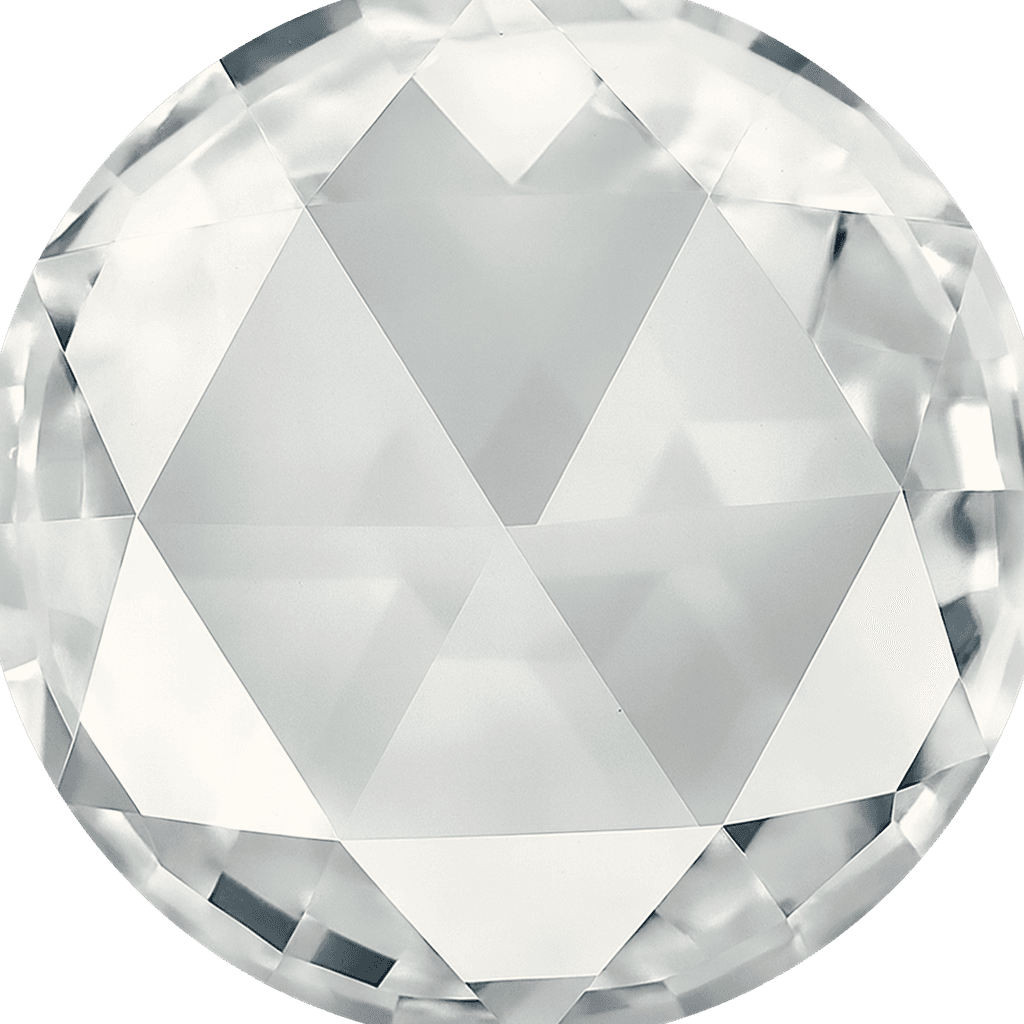
The rose cut is one of the oldest diamond forms — a flat base, domed top, and triangular facets that produce a soft, romantic glow.
3-24 facets
About the Rose Cut
Dating back to the 16th century, the rose cut predates modern brilliant cutting by hundreds of years. Named for the way its facets resemble the petals of a rose bud, this cut features a flat base (no pavilion) and a domed crown with 3 to 24 triangular facets. Without the pavilion of a modern cut, the rose cut does not produce the fiery brilliance we associate with contemporary diamonds. Instead, it offers a soft, diffuse glow — a quiet, candlelit warmth that evokes the romance of a bygone era. Rose cuts sit very low on the finger, creating a profile that is both elegant and understated.
Characteristics
- Flat base with domed crown — no pavilion
- Triangular facets resembling rose petals
- Soft, diffuse glow rather than sharp brilliance
- Very low profile on the finger
Ideal Settings
- Antique bezel
- Vintage ring
- Low-profile
- Pendant
- Cluster
Advantages
- Antique, romantic aesthetic unlike any modern cut
- Very low setting profile — comfortable for daily wear
- Each stone is unique — hand-cut character
- Growing demand in bespoke and vintage-inspired design
- Typically 20-30% less expensive than equivalent brilliant cuts
Considerations
- No fire or brilliance in the modern sense
- Inclusions are more visible due to flat cut
- Limited availability — not mass-produced
- Requires higher clarity grade (VS2 or above recommended)
Size Guide
Rose cuts spread wider than brilliant cuts of the same carat weight due to their flat base. A 1-carat rose cut can appear significantly larger face-up than a 1-carat round brilliant. This makes rose cuts excellent value for those who prioritise visual size over sparkle.
History & Origins
The rose cut first appeared in the 16th century, likely originating in India or the Netherlands — two historic centres of the diamond trade. It became the dominant diamond cut throughout the Georgian (1714-1837) and early Victorian (1837-1860) eras, long before the round brilliant was invented. The name "rose cut" comes from the faceted dome's resemblance to an unopened rose bud when viewed from above. During the Victorian period, rose cuts were the diamond of choice for royalty and aristocracy — set in silver-topped gold settings by candlelight, where their soft glow was considered the pinnacle of elegance. The invention of the round brilliant in 1919 gradually displaced the rose cut from mainstream jewellery. However, since the 2010s, rose cuts have experienced a significant revival among collectors, bespoke jewellers, and those seeking an alternative to the ubiquitous brilliant cut. Today's rose cuts are often paired with vintage-inspired settings — halo designs, milgrain detailing, and bezel settings that honour the cut's heritage.
Rose Cut vs Round Brilliant
| Rose Cut | Round Brilliant | |
|---|---|---|
| Facets | 3-24 triangular | 58 precisely angled |
| Sparkle type | Soft, diffuse glow | Intense fire and brilliance |
| Profile height | Very flat — sits low on finger | Deeper — sits higher on finger |
| Face-up size | Appears 15-25% larger per carat | Standard size per carat |
| Price | Typically 20-30% less | Premium due to rough wastage |
| Inclusion visibility | More visible — recommend VS2+ | Well hidden by facet pattern |
| Best lighting | Candlelight, warm ambient | All lighting conditions |
| Era | 16th-19th century | 1919 onwards |
Best Settings for Rose Cut Diamonds
Bezel setting
The thin metal rim wraps around the flat edge of the rose cut, protecting the stone while echoing its vintage character. The most traditional and secure option.
Halo setting
A ring of smaller brilliant-cut diamonds surrounds the rose cut, adding sparkle that the rose cut itself doesn't produce. This creates a beautiful contrast between the soft centre and glittering frame.
Cluster setting
Multiple small rose cuts arranged together create a larger visual impact with an antique, organic feel. Popular in Georgian and Victorian revival jewellery.
Low-profile solitaire
Rose cuts naturally sit low on the finger, making them ideal for an understated solitaire that won't catch on clothing. Perfect for daily wear.
Buying Advice
When buying a rose cut diamond, prioritise clarity (VS2 or above) since the flat, open facets reveal inclusions more than a brilliant cut would. Colour is less critical — many collectors prefer warmer tones (G-J) as they complement the vintage aesthetic. Because rose cuts are not standardised like round brilliants, each stone is genuinely unique. Ask to see the stone in warm, ambient lighting — this is where rose cuts truly come alive. At MOH London, our Hatton Garden gemmologists can help you source the perfect rose cut and design a bespoke setting that honours this historic cut.
Frequently Asked Questions
Are rose cut diamonds real diamonds?
Yes, absolutely. Rose cut diamonds are real, natural diamonds — the "rose cut" refers to the way the diamond is shaped and faceted, not the material. It is one of the oldest diamond cutting styles, predating the modern brilliant cut by over 300 years.
Why are rose cut diamonds cheaper than brilliant cuts?
Rose cuts retain more of the original rough diamond during cutting (less material is wasted), which reduces the cost per carat. Additionally, they are not graded on the same cut quality scale as brilliant cuts, and market demand is lower — though growing. Expect to pay 20-30% less for a rose cut compared to a round brilliant of the same carat weight and clarity.
Do rose cut diamonds sparkle?
Rose cuts produce a soft, diffuse glow rather than the sharp, fiery sparkle of a brilliant cut. They reflect light in broad, gentle flashes — often described as a "candlelit" or "moonlit" quality. This subtlety is precisely what makes them attractive to those seeking something different from modern brilliance.
What is the best setting for a rose cut diamond?
Bezel and halo settings are the most popular choices. A bezel protects the flat edge of the stone and complements its vintage character. A halo of brilliant-cut diamonds adds sparkle around the softer centre stone. Low-profile solitaires also work beautifully, as rose cuts naturally sit flat on the finger.
Are rose cut diamonds good for engagement rings?
Rose cuts make stunning engagement rings for those who value uniqueness over maximum sparkle. They sit low on the finger (comfortable for daily wear), appear larger than brilliant cuts of the same carat weight, and offer an antique elegance that stands apart from conventional engagement rings. They are particularly popular with vintage lovers and those drawn to Georgian or Art Deco aesthetics.
What clarity should I choose for a rose cut diamond?
We recommend VS2 or higher for rose cuts. Because the flat, open facets don't mask inclusions the way a brilliant cut's 58 facets do, any visible inclusions will be more apparent. A VS2 grade ensures the diamond is eye-clean — no inclusions visible without magnification.
Book a Consultation
Speak to our Hatton Garden gemmologists about rose cut diamonds for your bespoke piece.